 Rise and shine, it’s time to relaunch our regular(ish) roundup of breaking news from early America. To the links!
First up, enjoy a walk through life after the American Revolution with this podcast series charting the life and times of William Hamilton of The Woodlands, who “made the estate an architectural and botanical showpiece of early America.” Or put presidential parades in historical context, via Lindsay Chervinsky’s essay on George Washington’s reticence for public pomp and grandeur: “Why, then, did Washington, a man intensely proud of his military service and revered for it, reject the trappings of military honor?” In conference news, the Omohundro Institute of Early American History and Culture unveiled the program for next month’s meeting. Elsewhere in the blogosphere, check out John Fea’s reflections on a decade(!) of posting, and what it means to teach “Public History for a Democracy.” Or flip through the newly digitized papers of polymath Benjamin Franklin. Continue reading
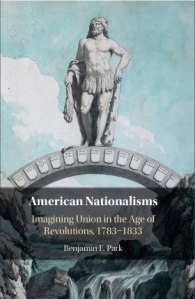
 Today’s interviewee hardly needs introduction for readers of The Junto. Ben Park is an assistant professor of history at Sam Houston State University in Texas; he earned his PhD in Britain’s second-best history department, at Cambridge University; and went on to hold a postdoctoral fellowship at the Kinder Institute on Constitutional Democracy. Far more importantly, of course, he is also the founder of this blog, and author of the recent monograph
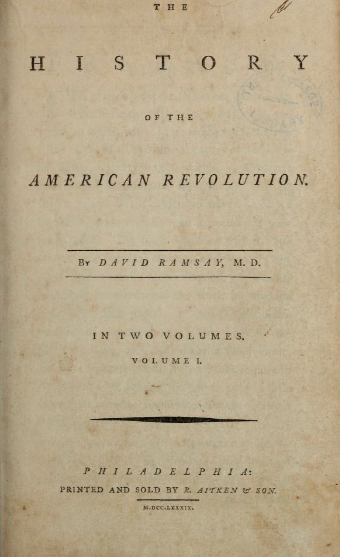



 It took me a long time to warm to The Ideological Origins of the American Revolution. I don’t think this is an uncommon experience for an early Americanist. Fifty years after its publication, Bailyn’s seminal work still features prominently on graduate and undergraduate reading lists. Yet it is hard to say that the book is beloved. Often, simply mentioning Bailyn’s name can be a pejorative shorthand—an outmoded view of the past that celebrates elites at the expense of the darker underbelly of the Revolution. As an undergraduate, I too railed against the book. How far, I asked with youthful bluster, were minutemen really inspired by the cautionary tale of seventeenth-century Denmark? And yet, like the profession itself, I have found it hard to shake Bailyn’s shadow. How is it that a book that is often only grudgingly admired still occupies such a large part of the field’s mental imagination?
  The Junto