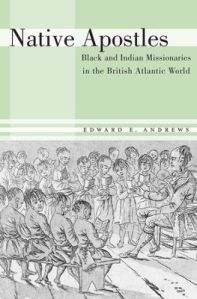
 On the eve of the American Revolution, an unlikely band of ministers and benefactors devised a plan to send John Quamine, a free black man, and Bristol Yamma, a slave, as missionaries to Africa. The project was conceived by the two would-be missionaries themselves, and supported by controversial Congregationalist minister Samuel Hopkins and his more moderate colleague Ezra Stiles. In 1774, Stiles and Hopkins arranged for the duo to be sent to the College of New Jersey, where Presbyterian minister (and president of the College) John Witherspoon would train them. Their proposed mission gained some notoriety, and a diverse lot of supporters championed their cause, including Quaker abolitionist Anthony Benezet, New Jersey lawyer and politician Elias Boudinot, Scottish theologian John Erskine the noted black poet Phyllis Wheatley, Eleazar Wheelock and his Mohegan pupil-turned-preacher Samson Occum, and black Anglican missionary to Africa Phillip Quaque (though his endorsement came with serious reservations). The outbreak of war in 1775 and the subsequent death of Quamine in 1779 ultimately thwarted the planned mission. In spite of its failure, though, it remains an important but oft-ignored episode in what Edward E. Andrews calls “the tangled history of cultural encounter between Europe, Africa, and the Americas” (188). Continue reading →
 Here’s your seasonal roundup of early American art on exhibit. Add your finds below!
 Here’s our fall preview of new titles—share your finds in the comments!
  In 1740, during George Whitefield’s first visit to New England, Connecticut minister Reverend Daniel Wadsworth wrote in his diary: “met with the famous life of Whitefield: but what is it?”[1] Wadsworth’s comments no doubt reflected both the excitement and the unease that Whitefield’s visit provoked among New England clergy, who both looked to him as a man who could renew piety and New England, but also feared his potential for exacerbating existing religious tensions. Nonetheless, it is a poignant question, and one anyone who is familiar with “the Grand Itinerant” might ask.


 In this month’s episode, Ken Owen, Michael Hattem, Roy Rogers, and Ben Park discuss Thomas Paine, including reconsidering the importance of his most famous work, “Common Sense,” his life as an eighteenth-century transatlantic radical, and his legacy today compared to that of the other “founders.”
 The Junto