
“Valley of the Catawissa in Autumn,” Thomas Moran (ca. 1862)
Fall brings new early American titles to explore. Enjoy our Spring Reads 2015 list, too, and share your finds below!
“Valley of the Catawissa in Autumn,” Thomas Moran (ca. 1862)
Fall brings new early American titles to explore. Enjoy our Spring Reads 2015 list, too, and share your finds below!
Guest poster Jacqueline Reynoso is a PhD candidate at Cornell University. This is the sixth post in a weeklong roundtable about “The Origins of the American Revolution.” On Monday, Tom Cutterham kicked things off by exhorting historians to stop “separat[ing] economic from constitutional, imperial, political, or even intellectual causes of the revolution.” On Tuesday Jessica Parr raised questions about the convergence of religious and political rhetoric during the Revolution. Mark Boonshoft considered the importance of civil society and associationism. On Thursday, Michael Hattem called for sharper attention to the periodization when discussing the origins and/or causes of the Revolution. In yesterday’s post, Ken Owen argued for using politics as the lens with which to sharpen our focus on the disjunctures of the 1760s and 1770s. Today, the roundtable concludes with Reynoso commenting on alternative vantage points of empire during the American Revolution.
 In October of 1780, the governor of Quebec, Frederick Haldimand, warned against changing the laws and regulations of the British colony. It required “but Little Penetration,” he claimed, to reach the sobering conclusion that “had the System of Government Sollicited by the Old Subjects been adopted in Canada, this Colony would in 1775 have become one of the United States of America.” He continued, “Whoever Considers the Number of Old Subjects who in that Year corresponded with and Joined the Rebels, of those who abandoned the defense of Quebec… & of the many others who are now the avowed well wishers of the Revolted Colonies, must feel this Truth.”[1]
This is the fifth post in a weeklong roundtable about “The Origins of the American Revolution.” On Monday, Tom Cutterham kicked things off by exhorting historians to stop “separat[ing] economic from constitutional, imperial, political, or even intellectual causes of the revolution.” On Tuesday Jessica Parr raised questions about the convergence of religious and political rhetoric during the Revolution. Mark Boonshoft considered the importance of civil society and associationism, and yesterday Michael Hattem called for sharper attention to the periodization of the Revolution. In today’s post, Ken Owen argues for using politics as the lens with which to sharpen our focus on the disjunctures of the 1760s and 1770s. Tomorrow, the roundtable will conclude with a guest post from Jackie Reynoso.
 Revolutionary America was a politicized society. All of the most important conflicts of the American Revolution, from the Stamp Act through Independence to the ratification of the Constitution, were sharply divisive events which demanded citizens take sides. Even neutrals were compelled to give outward displays of support to either patriots or loyalists (often both!). There were very little chances to avoid conflict over such weighty issues—they would reshape and redefine friendships, families, and communities. Continue reading
This is the fourth post in a weeklong roundtable about “The Origins of the American Revolution.” On Monday, Tom Cutterham kicked things off by exhorting historians to stop “separat[ing] economic from constitutional, imperial, political, or even intellectual causes of the revolution.” His post was followed on Tuesday by Jessica Parr’s post, which raised questions about the convergence between religious and political rhetoric during the Revolution. Yesterday, Mark Boonshoft considered the importance of civil society and associationism in thinking about the origins of the Revolution. The roundtable will continue tomorrow with a post by Ken Owen and on Saturday with a final guest post by Jackie Reynoso.
 In thinking over my contribution to this roundtable, I realized that, in the last two years, I have written at least five posts and done an episode of The JuntoCast on this very topic. In “The Return of the Revolution,” I called for a recommitment to the questions of origins and causes, something that had been hampered by synthetic studies of the late colonial period based on a consensus model. In “#RevReborn, Periodization, and the American Revolution,” I discussed the problematic uncertainty regarding periodization of the Revolution, particularly the recent trend to extend the endpoint of the Revolution and the reluctance to do the same in terms of the beginning of the Revolution. In “Have Cultural Historians Lost the American Revolution?” I tried to understand the recent relative ennui regarding study of the Revolution’s “origins and causes” in the broader context of developments in the field as a whole. And, in “The ‘Suddenness’ of the ‘Alteration’: Some Afterthoughts on #RevReborn2,” I noted the disappointing lack of papers directly engaging the questions of origins and causes at a recent conference devoted to the 250th anniversary of the Stamp Act.[1] Continue reading
This is the third post in our roundtable on the origins of the American Revolution. Tom Cutterham kicked things off on Monday with a post about Nick Bunker’s recent book and on Tuesday Jessica Parr wrote about religion and the American Revolution.
 This roundtable grew out of a sense that the study of the Revolution’s origins or causes has been neglected of late. Which seems true enough. At the very least, historians have proven more comfortable talking in more amorphous ways about the “the coming of the Revolution” or “the making of revolutionary America.” I am certainly guilty of that. Yet there are, I think, compelling reasons for approaching the Revolution this way. Continue reading
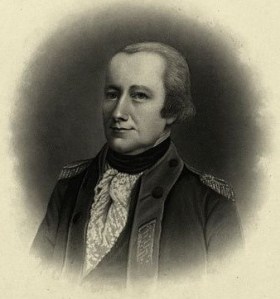 On April 25, 1775, hundreds of New Yorkers acknowledged receiving “a Good firelock, Bayonet, Cartouch Box, and Belt.” Six days after the Battles of Lexington and Concord, and three days after Israel (Isaac) Bissell told New Yorkers the news, Alexander McDougall mobilized support against the British. The War of American Independence had reached New York and, with hundreds of supporters, McDougall was ready to fight.[1] By April 1775, McDougall was a revered figure across colonial America, widely known as “the Wilkes of New York.” He was an individual who, like John Wilkes, was perceived as willing to fight for the liberties of the press, the people’s welfare, and against arbitrary rule.[2] McDougall’s popularity, by 1775, had been five years in the making. But, in 2015, historians are yet to fully appreciate the role he played in the coming of the Revolution. In this post, I want to reemphasize his influence in affecting New Yorkers’ allegiances. Continue reading
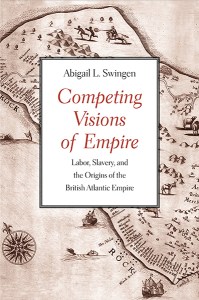 Abigail Swingen is an Assistant Professor of History at Texas Tech University (Lubbock, TX). She received her Ph.D. in History from the University of Chicago. She specializes in the Early Modern British Atlantic Political Economy. Competing Visions of Empire is her first book and was reviewed here yesterday. The following is part of our (relatively) new tradition of reviewing a book and then offering a Q & A with the author the following day. [NB: You can find my review from yesterday here.] Continue reading
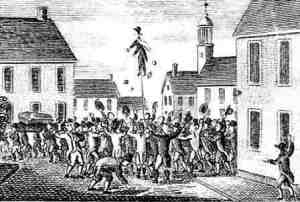 This morning on the other side of the Atlantic, I woke up early in preparation for a seminar on William Otter, whose History of My Own Times closes the list of our readings in my Revolutionary America class. Essentially, Otter was a brawling, violent, white man in the 1800s, living variously in New York, Pennsylvania, and Maryland. He jumped from job to job while engaging in various aggressive “sprees” against African Americans, Irishmen, and anyone else who seemed a likely candidate before becoming a burgess of Emmitsburg, Maryland.[1] And instead of getting up to prep this morning, I remained in bed, glued to the #BaltimoreUprising and #BlackLivesMatter hashtag on Twitter, as, I’m sure, were many of you during the late hours of the night. During times like these, it’s part of our jobs as historians to acknowledge that different types of violence have specific meanings that change over time. And so Juntoists have compiled a bibliography for our mutual education. Continue reading
 Last year, my university shifted its policy on assignments, meaning that faculty members suddenly got the option to change extant assignments, make new ones, and alter the weighting of any of them. This was a big transition, given that in previous years assignments were set by the department and students in each of our three class years could expect similar assignments in their courses. As a result, I’ve been playing around with assignments of zero or very little weight to try to prepare students—especially first year students—for the sometimes daunting task of the final essay assignment. Whereas before there was one low-weighted writing assignment before the final essay was due, I now have the low-weighted writing assignment (it’s half the length it was in previous years), an unassessed research proposal, and an annotated bibliography worth 10%. I want to talk about one of the problems with this last assignment. Continue reading
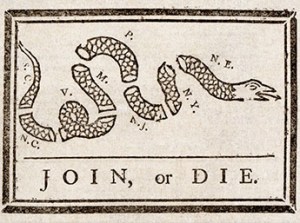 At the risk of overkill, I have thoughts about the “So Sudden an Alteration” conference hosted by the Massachusetts Historical Society, which I attended along with a number of my Junto colleagues. I’d like to pick up on the themes of the conference to discuss an underlying tension in the conversation that never quite reached the surface in explict terms.
 The Junto