Guest posters Richard Calis and Madeline McMahon are graduate students in the History Department at Princeton University. Along with Frederic Clark, Anthony Grafton, and Jennifer Rampling, they are part of a collaborative research project (@WinthropProject) studying how multiple generations of Winthrops read, annotated, and acquired books on both sides of the Atlantic.
 John Winthrop (1588-1649) and his son John Winthrop Jr. (1606-1676) are now known primarily as protagonists in the turbulent political history of early America. But in addition to shaping the government and theology of New England as governors of Massachusetts Bay and Connecticut (respectively), they and the rest of the Winthrop family also participated in a transatlantic and inter-generational bookish culture. Long before the Arbella sailed to Boston in 1630 to build a “city upon a hill”, generations of Winthrops began to talk about books, ways to read them and, as we will illustrate here, the difficulties and contingencies of collecting them—on both sides of the Atlantic. Continue reading

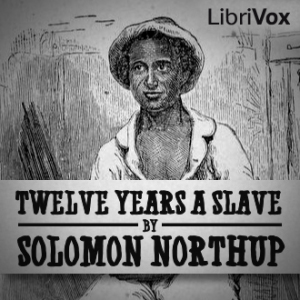 As a newly-minted ABD embarking on my first stab at teaching the early American history survey, I find myself buried beneath my own excitement for the material. No one warned me that the biggest obstacle to designing a course would be curbing my own unrelenting enthusiasm. Perhaps no part of that enthusiasm has proven more damaging to my syllabus than my passion for storytelling. Specifically, I approached teaching the early America survey with a litany of historical works of fiction and non-fiction that I wanted to familiarize undergraduates with: 12 Years a Slave, Benito Cereno, Poor Richard’s Almanac, Letters From an American Farmer, among many, many other titles. Before too long I was looking at a weekly reading word count over 150 pages. Yikes.
 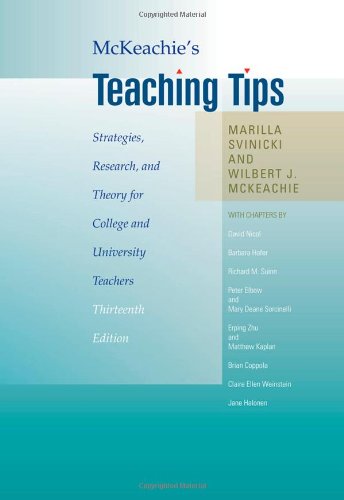 In all the teaching orientations and training manuals I’ve encountered, they all advise instructors not to be afraid of silence. The average student, they say, takes up to 8 seconds to mentally prepare an answer to an analytical query. But what happens when the silence isn’t because students are choosing which of their brilliant thoughts to share with the class but because most of them failed to do the reading? I suspect every college teacher has had a class session in which most questions were met with complete silence. What can we, as the instructors, do in such situations? And how can we better incentivize students to take their assigned reading seriously?


 The Junto