Kathleen Duval, Independence Lost: Lives on the Edge of the American Revolution (New York: Random House, 2015).
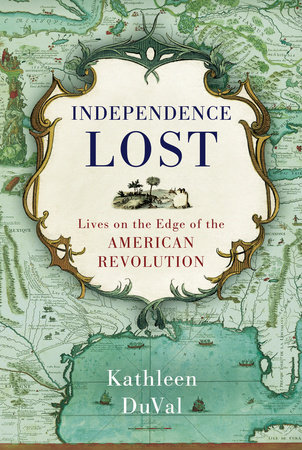 When most people think about the American Revolution and its cast of characters, names like Thomas Jefferson, John Adams, and George Washington spring to mind. On the British side, people might think of John André, Benedict Arnold, John Burgoyne, and, sometimes, Lord Dunmore. Though some of these people appear in Kathleen DuVal’s latest book, Independence Lost: Lives on the Edge of the American Revolution, most of DuVal’s narrative centers around people who seldom feature in books or articles on the American Revolution. It is not the American Revolution that most people know. Indeed, “The American Revolution on the Gulf Coast,” DuVal writes, “is a story without minutemen, without founding fathers, without rebels. It reveals a different war with unexpected participants, forgotten outcomes, and surprising winners and losers.” Continue reading

 Hip-hop is on Broadway, not just in a popular YouTube
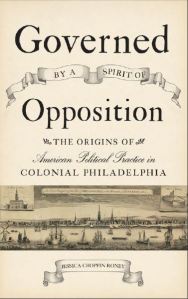 In recent years, early American political history has received considerable attention. A range of historians have enriched our understanding of how Americans participated in and contributed to politics in the early republic.
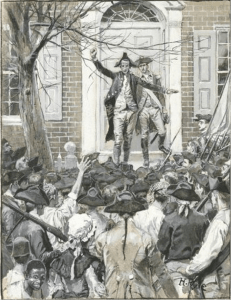
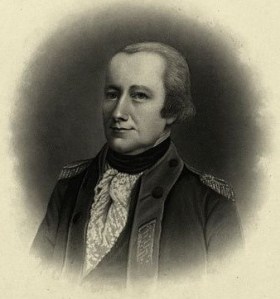 On April 25, 1775, hundreds of New Yorkers acknowledged receiving “a Good firelock, Bayonet, Cartouch Box, and Belt.” Six days after the Battles of Lexington and Concord, and three days after Israel (Isaac) Bissell told New Yorkers the news, Alexander McDougall mobilized support against the British. The War of American Independence had reached New York and, with hundreds of supporters, McDougall was ready to fight.
 I like eye-catching book titles. Who doesn’t, right? A good title should run of the tongue without too much fuss, while also championing the main argument(s) of the book. Recent books with titles that caught my eye include Benjamin Irvin’s Clothed in Robes of Sovereignty, Jessica Roney’s Governed by a Spirit of Opposition, and Albrecht Koschnik’s “Let a Common Interest Bind Us Together.” To be sure, there are others, and they are held together by a common thread: Despite looking at different periods with different objectives, each title offers a snapshot of what the reader can expect to find.
 The Junto