Before the Trail

Francis Parkman's Medicine Chest

Francis Parkman’s Medicine Chest

Pratt must be paid. There was a route to examine one last time, and three shirts to stuff into a knapsack bulging with flannels and history books, powder and shot. The Berkshire Hills trip was a rush job; he needed to return for graduation in late August, 1844. Into the knapsack went a 4” x 2½” dusky-green journal, with shorthand notes in pencil. After a boyhood spent hunting and riding bareback on the Medford frontier, the blue-eyed Harvard senior, 20, knew how to pack for a research errand into the wilderness. Already, he boasted colorful adventures from past summer forays, fine-tuning the field skills that history professor Jared Sparks did not cover in class. Take July 1841: Scaling his first New Hampshire ravine, the rookie historian slipped and swung free, clawing air. As he “shuddered” and clung to the crag, a hard sheaf of pebbles fell, “clattering hundreds of feet” to the sunny gulf below.
 

Continue reading

Personal Networks and a First Draft of the Literary Canon

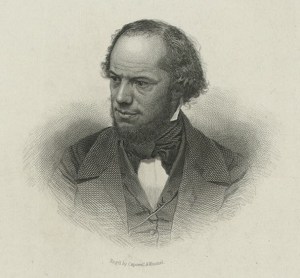
RufusWGriswoldAntebellum editors were bulk retailers. Whatever else their business involved, it happened at scale, and I’m often astonished by how much prose a nineteenth-century newspaper or magazine editor could churn out in a day. Of course, most of that prose was recycled, and much of it was banal. As a forthcoming article by Ryan Cordell, based on research by the Viral Texts Project at Northeastern University, observes, the most-reprinted antebellum newspaper articles were pieces of “information literature”—not news, but scrapbookable things like an 1853 starch recipe or a clipping about the dietary value of tomatoes.[1] Apparently, antebellum readers welcomed such textual flotsam—but it was especially useful to editors, who needed a steady flood of context-free, easily resized gobbets of writing for their pages.

The bulk-retail principle applied to literary editors, too, and the difference between “literary” and other kinds of antebellum periodical work is hard to define. For the last couple of weeks, I’ve been thinking about what that meant for the formation of an American literary canon in the antebellum period.

Continue reading

Making the Most of Your Time in the Archives: Research Technology

mainpageAs funding budgets shrink, many historians face increased pressure to make the most of their time in distant archives. For a number of years now, a lot of researchers have favored a good digital camera, which (theoretically) allows for a faster gathering of primary source materials than traditional note-taking methods. Of course, as historian Larry Cebula humorously observed, failure to exercise good digital stewardship with your own personal archives can have disastrous consequences.

Continue reading

Guest Post from Vaughn Scribner: “Fabricating History: The Curious Case of John Smith, a Green-Haired Mermaid, and Alexandre Dumas”

Vaughn Scribner is a Visiting Assistant Professor at the University of Central Arkansas. He has published on topics ranging from early American tavern culture to the commodification of slaves in Tidewater Virginia, and also has a forthcoming article on early American mineral springs and spas. His book manuscript (in progress), Beyond Bacchus: Colonial Taverns and the Golden Age of the British Empire in America utilizes the colonial tavern space to realize how urban colonists realized the full potential of the British Empire in America from 1744 to 1765. He is also currently researching for an article on early modern conceptions of mermaids and tritons. For more info or to contact Vaughn, please visit www.vaughnscribner.com.

Figure 1:

Figure 1: “Captain Hailborne at St. Johns Newfoundland, 1655,” from Ludwig Gottfriedt, Newe Welt und Americanische Historien (Frankfurt/ Bey denen Merianischen Erben, 1655). The Mariners’ Museum.

I originally planned for this piece to be a brief investigation into a number of articles that appeared in the Gentleman’s Magazine from 1750 to 1775. The articles, it must be added, consisted of in-depth analysis of mermen and mermaids. Yes, a number of early modern Britons—ranging from Cotton Mather to Benjamin Franklin—entertained, if not believed in, the existence of merfolk.[1] A deeper analysis of early modern conceptions of mermen and mermaids, my article would propose, provide a more nuanced understanding of Britons’ imperial imaginations. But that will have to wait, because my research for this piece led me down a different path that was both extremely frustrating and, ultimately, quite enlightening. Continue reading

The Many & the One

Lexington DoolittleLike many, Amos Doolittle struggled to turn in a decent first draft of American history. The 21 year-old engraver, later known as the “Paul Revere of Connecticut,” arrived in Lexington and Concord shortly after April 1775. Anxious to capture the battles’ action and aftermath, he chatted with local residents. He sketched terrain. For Doolittle, a trained silversmith, it was a chance to experiment with a craft he had yet to master. Part of what he produced, a set of four views storyboarding the “shot heard round the world,” hangs in the Boston Public Library’s new exhibit, “We Are One: Mapping America’s Road from Revolution to Independence.” By Doolittle’s lights, Massachusetts makes for a furious and frenzied tableau: gusts of redcoats’ gunpowder hazing the sky, and colonial ranks splintering on the advance. On the American side, it is hardly a picture of union. Patriots scatter, racing blindly to frame’s edge. In his rough draft of Revolution, Amos Doolittle demands that we unlock all hopes of what might come next. Continue reading

The Importance of Partisanship in New York City, ca. 1769–1775

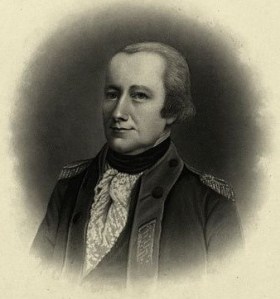
Alexander McDougallOn April 25, 1775, hundreds of New Yorkers acknowledged receiving “a Good firelock, Bayonet, Cartouch Box, and Belt.” Six days after the Battles of Lexington and Concord, and three days after Israel (Isaac) Bissell told New Yorkers the news, Alexander McDougall mobilized support against the British. The War of American Independence had reached New York and, with hundreds of supporters, McDougall was ready to fight.[1] By April 1775, McDougall was a revered figure across colonial America, widely known as “the Wilkes of New York.” He was an individual who, like John Wilkes, was perceived as willing to fight for the liberties of the press, the people’s welfare, and against arbitrary rule.[2] McDougall’s popularity, by 1775, had been five years in the making. But, in 2015, historians are yet to fully appreciate the role he played in the coming of the Revolution. In this post, I want to reemphasize his influence in affecting New Yorkers’ allegiances. Continue reading

Historical Charts and David Ramsay’s Narrative of Progress

A while back Slate’s “The Vault” blog ran a piece on John Sparks’s “Histomap” from 1931. I was recently reminded of that post as I came across a number of eighteenth-century historical charts during my dissertation research on eighteenth-century American history culture.[1] In the eighteenth century, there were conflicting understandings of historical time. Some understood time to be cyclical, as evidenced by the rise and (inevitable) fall of empires throughout history. Increasingly, however, historical time was coming to be understood as linear (in a mechanical, Newtonian sense). With the linear conception came the idea of historical time as being fundamentally progressive. This conception was further distinguished by those who understood it in terms of a narrative of social and political progress and those who understood it in millennialist terms, i.e., time progressing toward the end-of-days. These ideas shaped the ways in which one thought about history, and, in a time when historical distance was far more truncated than today, they had a profound effect on how one viewed their contemporary world. Historical understanding and, hence, historical writing were undergoing significant shifts in the eighteenth century. One of the by-products of these developments was the historical chart.

Continue reading

Set in Stone

Stone LibraryEvery president has a past, and to his regret, John Adams did not save all of it for history’s sake. “Whatever you write preserve,” he directed his grandsons in 1815. “I have burned, Bushells of my Silly notes, in fitts of Impatience and humiliation, which I would now give anything to recover.” Continue reading

Natural Histories

hannah

See the world through Hannah Winthrop’s eyes. Your gaze dips down into the high-polished tea table and shears past John Singleton Copley’s brush, into summer 1773. Shown here serenely grasping a nectarine branch, Hannah likely knew that her world—what she called the “same little peaceful circle”—was spinning into a new revolution. Continue reading

The King’s Arms?

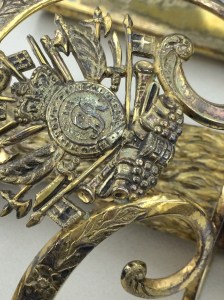
IMG_1862Paper soldiers on the march, and tin men tilting at swordpoint: these were the first battle ranks that Grenville Howland Norcross, aged 11 in Civil War Boston, led to glory. Between phantom invasions and replays of Antietam with “relics” received as gifts, Norcross gobbled up the military heroics popularized by the era’s dime novels. In a childhood diary that illustrates how “lowbrow” literature grabbed the imagination of a warsick homefront, Norcross chronicled his progress through the antics of Kate Sharp, Old Hal Williams, and Crazy Dan. By 1875, Norcross had outgrown his toy battalions, graduated Harvard, and stepped into a law career. An avid autograph collector, from his Commonwealth Avenue perch Norcross nurtured the city’s flourishing history culture, taking a leading role at the New England Historic and Genealogical Society, the American Antiquarian Society, and the Bostonian Society. He rose to serve as Cabinet-Keeper for the Massachusetts Historical Society, supervising the intake and cataloguing of major collections including, by April 1920, the library of historian Henry Adams. At the Society’s next meeting, held in the midafternoon of 10 June, Grenville Norcross reported on the Cabinet’s newest curiosity, which has proven a royal mystery ever since:

Continue reading