
The influence of Edmund Morgan’s American Slavery, American Freedom: The Ordeal of Colonial Virginia is inarguable. For such a lean volume it casts a long shadow upon our understandings of colonial Virginia, the development of slavery in the American South, the relationship between racism and equality, and a variety of other interpretative problems large and small. Scholars since the book’s publication have revised and extended its arguments—into questions of gender and class consciousness—and more than a few have sought to topple its conclusions but Morgan’s central contention that “[r]acism made it possible for white Virginians to develop a devotion to the equality that English republicans had declared to be the soul of liberty” remains more or less intact.[1] During my graduate education, at both the master’s and doctoral levels, Morgan’s arguments have served as the starting point in many a seminar meeting’s discussion of America’s long history of racial inequality. Few interpretations of any historical question can claim such sustained influence.
The question I pondered, as I reread American Slavery, American Freedom for this essay, is simple: why? Why has Morgan’s interpretation of colonial Virginia survived, despite the many shifts in the historiographical winds over the last thirty-eight years, when many other powerfully argued interpretations have withered and died? What gives this book its continuing appeal to the historical profession? Continue reading
 Ed Morgan changed the way historians understood the American Revolution. Over a period of about ten years, from 1948 to 1957, he published three important research articles, a monograph, an essay aimed at a general audience, and a historiographical article, all having to do with the coming of the Revolution. It was an amazing burst of work that elevated Morgan to the upper echelons of American historians. Of course, Morgan had previously worked on Puritanism and would go on to do groundbreaking work on colonial Virginia and slavery. But he made his bones with the American Revolution.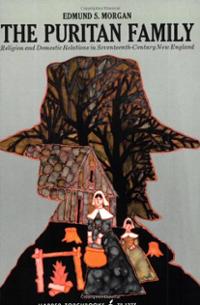
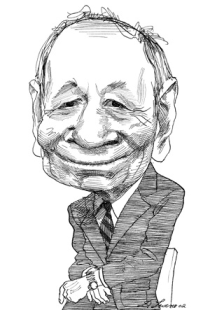 dmund Sears Morgan was born on January 17, 1916 in Minneapolis, Minnesota.[1] His father, Edmund Morris Morgan, was a Professor of Law at the Minnesota Law School, Yale University, Harvard University, and Vanderbilt University. Ed the Younger attended Belmont Hill School from which he graduated in 1933. From there, he left to do his undergraduate work at Harvard. In his second year, he took a course taught by F.O. Mathiessen, his senior tutor, and Perry Miller, whom Morgan called “simply the most exciting lecturer” he had encountered. The experience turned a budding English major into an American history and literature major. Upon graduation, Morgan spent a year at the London School of Economics studying with Harold Laski.
  In his essay on “Eating American,” the anthropologist Sidney Mintz relates a class conversation during which he admitted that he “did not think that there is such a thing as an American cuisine.”[1] Around this time of year, it’s impossible to ignore the influx of commercials, ads, and general hullabaloo pushing “American food” for the Fourth of July. I have to admit that I’ve been convinced by Mintz’s point for a long time, especially as that assertion pertains to the world of early American cuisine.
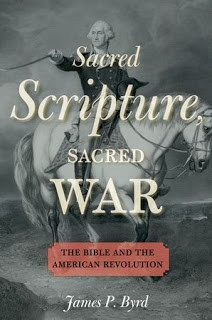 “The Revolution may be the most important event in American history,” James P. Byrd reminds us. Many of the readers of this blog will likely agree with him in that. Fewer, perhaps, will agree with one of the central arguments of his (very) recent Sacred Scripture, Sacred War: The Bible and the American Revolution that “the Bible was arguably its [the Revolution’s] most influential book.”[1] At the recent
  Looking forward to attending one of the largest conferences on the American Revolution in a generation this week in Philadelphia, I thought I would take a moment to reflect on the title of the conference—”
 The Junto