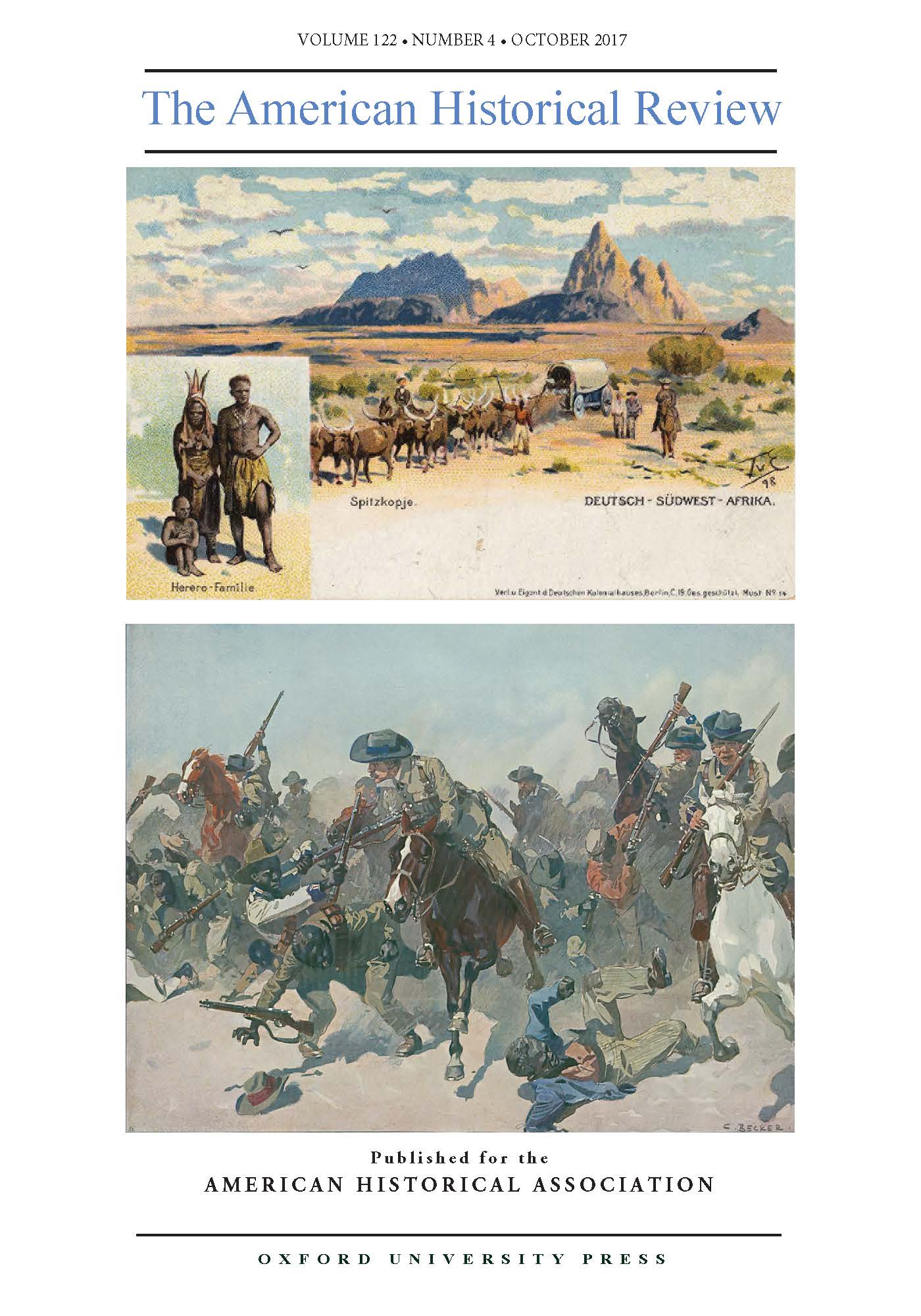
 An article just came out in the American Historical Review’s October issue that should be on the radar for anyone interested in early American history: Holly Brewer’s “Slavery, Sovereignty, and ‘Inheritable Blood’: Reconsidering John Locke and the Origins of American Slavery.” In it, Brewer connects Locke’s criticism of absolutism with an opposition to inheritable slavery, thereby casting our understanding of democracy, capitalism, and slavery in an entirely new light. Continue reading
Category Archives: Recent Scholarship
Guest Post: George Washington’s Mausoleum: Congressional Debates Over the Work of Monuments
Jamie L. Brummitt is a Ph.D. Candidate in American Religion at Duke University and an online instructor for the Department of Philosophy and Religion at the University of North Carolina Wilmington (UNCW). Her dissertation “Protestant Relics: The Politics of Religion & the Art of Mourning” examines the lively relic culture that thrived in political and religious life of the United States from the 1770s to 1870s.
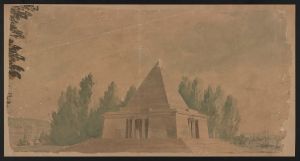
Benjamin H. Latrobe, Watercolor, ink, and pencil of the proposed Washington mausoleum, c. 1800, Library of Congress.
If the recent acts of iconoclasm in Durham and Charlottesville have taught us anything, it may be this: monuments matter. They matter not just in an ideological sense, but in a material sense. Monuments work as material objects because they embody people, memory, and ideas for better or worse. This post examines the proposed construction of a mausoleum for George Washington’s remains by Congress. The proposed mausoleum was entangled in debates about politics, finances, and the material nature of monuments. Many congressmen argued that a monument to Washington should work with his remains to transfer his virtues to Americans. Continue reading
Guest Post: Patriotism, Partisanship, and “The Star-Spangled Banner”: A View from the Early Republic
Billy Coleman is a Postdoctoral Fellow in History at the Kinder Institute for Constitutional Democracy at the University of Missouri. He received his PhD from University College London (UCL), and is currently completing a book manuscript called, “Harnessing Harmony: Music, Power, and Politics in the United States, 1788-1865.” He is also the US-based book review editor for American Nineteenth Century History and the author of “‘The Music of a well tun’d State’: ‘The Star Spangled Banner’ and the Development of a Federalist Musical Tradition” (Journal of the Early Republic 35, no. 4).
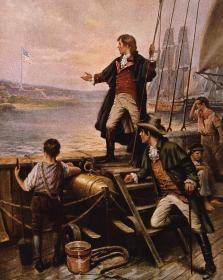 As I type, President Donald Trump is tweeting: “#StandForOurAnthem.” The presidential hashtag was created in response to over two hundred NFL players who this weekend chose to protest racial injustice and police brutality by kneeling, sitting, raising fists, or linking arms in solidarity during the national anthem. Their actions add to what is now a year-long protest movement surrounding “The Star-Spangled Banner,” started initially by former 49ers quarterback Colin Kaepernick. Now, the controversy has expanded significantly in defiance of President Trump’s suggestion that NFL team owners should “fire or suspend” players who “disrespect” their country by refusing to stand for the anthem. Continue reading
Q&A: Max Perry Mueller, Race and the Making of the Mormon People
 Max Perry Mueller is assistant professor of religious studies in the Department of Classics & Religious Studies of the University of Nebraska-Lincoln, and the author of the recently-released Race and the Making of the Mormon People (University of North Carolina Press, 2017). Be sure and read Ben Park’s review of that book, posted at The Junto yesterday. Continue reading
Book Review: Max Mueller, “Race and the Making of the Mormon People”
Modern Mormonism is known for being a predominantly white religion—at least in America. But a new book by religious studies scholar Max Mueller argues that the LDS faith has a complex and evolving story of racial imagination during the antebellum period. This is a declension narrative that is at once riveting and wrenching, and one that deserves a close reading.
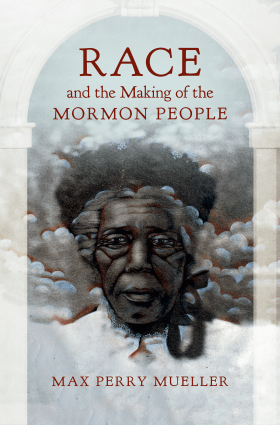 Max Perry Mueller, Race and the Making of the Mormon People (University of North Carolina Press, 2017). 352 pp., 17 halftones, notes, bibliography, index. [Also, make sure to see Mueller’s interview with The Atlantic.]
The Church of Jesus Christ of Latter-day Saints, commonly known as the Mormons, had audacious beginnings. They claimed a new book of scripture, a modern-day prophet, and a restored ecclesiastical structure. It was a reenactment of Christianity’s origins. And according to Max Mueller, those origins included a reformulation of America’s racial imagination. Contemporaries during the mid-nineteenth century were, to use a complex and problematic term, “secularizing” racial differences. They sought to justify slavery and segregation through a strict delineation of racial compartmentalization. Race, in other words, was becoming a fixed identity. But among Joseph Smith’s radical protests was an attack on that very assumption: Smith, the book Smith translated, and the movement Smith led, posited that race was a malleable component dependent more on righteousness than descent. They believed in a moderate “racial universalism” that, though it required the subjugation of non-white races, could unite the entire human family. Or, at least, they believed this during their first two decades, before eventually succumbing to a much more mainstream structure of racial difference. Continue reading
Review: Coll Thrush, Indigenous London

Coll Thrush, Indigenous London: Native Travelers at the Heart of Empire (New Haven: Yale University Press, 2016).
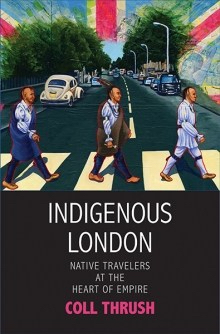 Wander through the Museum of London’s rich galleries, glowing with relics and rites of Roman Londinium, and you’ll spot scraps of the city’s wall half-strewn along the route. Burned in bits or eaten by age, the red-and-white brick arches splay out like the broken teeth of empire, grinding a crooked grin in today’s cityscape. Amid the tidy exhibits and visitors’ whirl, it’s a graphic reminder of what London was and how it has weathered so many centuries’ toll. But, as Coll Thrush’s Indigenous London asks us, “The audience of a museum is always / another sort of collection…Indigenous objects, Indigenous eyes—/ Who sees and what is being seen?” (p. 135). For the scholar rescuing clues from the built environment, the wall raises a complex set of research queries: Who passed through the city limits, and why? How did diverse travelers experience urban life at a sensory level? What did it mean for indigenous visitors to sample London? And how can we expand the historical canon of voices who tell that story in the early modern era? Continue reading
Q&A with Carla Pestana on The English Conquest of Jamaica
 To accompany the review by Casey Schmitt that was published yesterday, we are pleased to have this Question & Answer with Carla Pestana today regarding her new book, The English Conquest of Jamaica: Oliver Cromwell’s Bid for Empire (Harvard University Press, 2017). We thank Dr. Pestana for her time. Continue reading
Book Review: Carla Gardina Pestana, The English Conquest of Jamaica
Carla Gardina Pestana, The English Conquest of Jamaica: Oliver Cromwell’s Bid for Empire (Cambridge: The Belknap Press of Harvard University Press, 2017).
It is an exciting time to be a scholar of Caribbean history. From conferences to publications, the past decade has seen historians of early America, Latin America, and the Atlantic world turn to the Caribbean for insights into the development of empire, slavery, race, and commerce.[1] In this resurgence of Caribbean historiography, the seventeenth century has emerged as a pivotal period. That said, by taking a relatively well-known event like the Western Design, UCLA Professor and Joyce Appleby Endowed Chair of America and the World, Carla Gardina Pestana, demonstrates the value of exploring the early Caribbean in her new book The English Conquest of Jamaica: Oliver Cromwell’s Bid for Empire. Pestana’s work aptly shows the profound intellectual pay-off for historians willing to explore the seventeenth-century Caribbean with bigger questions about imperialism, race, religion, and gender. Continue reading
The Reintegration of South Carolina Loyalists after the Revolutionary War
Rebecca Brannon, From Revolution to Reunion: The Reintegration of the South Carolina Loyalists (University of South Carolina Press, 2016).
 In her award-winning Liberty’s Exiles, Harvard University’s Maya Jasanoff offered a lively account of the Loyalist diaspora, those individuals who left the newly formed United States as a consequence of their Loyalism. In her highly anticipated appendix, Jasanoff stated that over 60,000 Loyalists left in search of a new home—but what of those who stayed? Until recently, the reintegration of some 400,000 Loyalists into American society has been an overlooked topic. As James Madison University’s Rebecca Brannon notes, “Historians of American Loyalism have long favored those who left . . . over those who stayed” (p. 5), and with her well-researched From Revolution to Reunion: The Reintegration of the South Carolina Loyalists (University of South Carolina Press, 2016), Brannon takes a major step to address this obvious historiographical oversight. Continue reading
Review: William Hogeland, Autumn of the Black Snake
William Hogeland, Autumn of the Black Snake: The Creation of the U.S. Army and the Invasion That Opened the West (New York: Farrar, Strauss and Giroux, 2017).
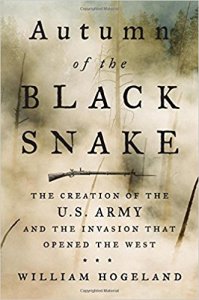
It’s fair to say that military history isn’t known for its commitment to social and political critique—at least not the kind of military history you might find at the airport. Autumn of the Black Snake offers much of what readers might want from that kind of book. It is unashamedly narrative-driven; carefully constructed for maximum tension and dramatic payoff; and there’s a fair amount of blood on the page too. But it is also designed to pose a challenge. Just what kind of entity was the newborn United States? From William Hogeland’s perspective, it was less an asylum of liberty than a super-powered successor to colonial land companies like the one that shaped the young George Washington. Continue reading
 The Junto