 Today I want to pretend that I know how to read science journals, particularly a recent Nature article by scientists Simon L. Lewis and Mark A. Maslin entitled “Defining the Anthropocene.”[1] Reading a summary about the article was provocation enough to read the article itself, which in turn sparked a more extended rumination about chronology, interdisciplinarity, and scholarly divides. Continue reading
Category Archives: Recent Scholarship
Spring Reads
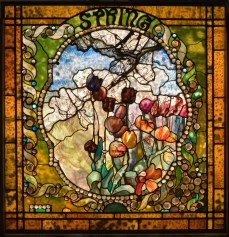 Here’s our seasonal roundup of new and forthcoming titles. Share your finds below! Continue reading
No Politics, No Revolution
 If there is a current orthodoxy among historians of the American Revolution, it is that the study of the Revolution has lost its focus. In their introduction to the Common-Place edition recapping the McNeil Center’s “The American Revolution Reborn” conference, Patrick Spero and Michael Zuckerman wrote of “a field that had grown stale” and that was “losing its verve, and worse, its center.” The call for papers for the forthcoming Massachusetts Historical Society conference effectively described the field as being stuck in a historiographical rut. There is a reason that study of the Revolution has lost its center. It has failed to concentrate its focus on politics. Continue reading
Review: Shelby M. Balik, Rally the Scattered Believers
Shelby M. Balik, Rally the Scattered Believers: Northern New England’s Religious Geography. Bloomington: Indiana University Press, 2014.
 At the beginning of February, Wake Forest University hosted a symposium marking the 25th anniversary of the publication of Nathan Hatch’s The Democratization of American Christianity (Yale University Press). The list of participants was a “who’s-who” of American religious history: Catherine Brekus, Sylvester Johnson, Mark Noll, Amanda Porterfield, Harry Stout, Grant Wacker (on more of a “who’s-that?” note, I was there, too, feeling honored but absurdly under-credentialed in that company). Each offered reflections on the book’s influence and reach, on his or her personal experience with it, on how its arguments have aged. Hatch, now the president of Wake Forest, offered an eloquent response. (Video of the event is available here.) Continue reading
Q&A with Stephen R. Berry, Author of A Path in the Mighty Waters
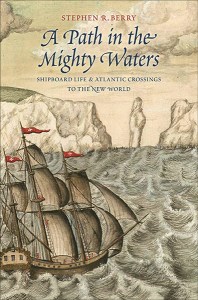 The following is an interview with Stephen R. Berry, an Associate Professor of History at Simmons College. My review of Berry’s recently-released book, A Path in the Mighty Waters: Shipboard Life and Atlantic Crossings to the New World (New Haven: Yale University Press, 2015) appeared on the blog yesterday. Today, he agreed to answer some follow-up questions about his book and his future research plans. Continue reading
Tempests and Tedium in the Transatlantic: Shipboard Life in the 18th Century
Stephen R. Berry, A Path in the Mighty Waters: Shipboard Life in Atlantic Crossings to the New World. New Haven: Yale University Press, 2015.
When colonial Georgia was founded in 1732, it carved out a brand new space in the New World. The founders’ intentions were in part for it to serve as a charitable colony, where Britons from overcrowded debtor’s prisons could start anew. It also carved out an English space to serve as a geographic barrier between wealthy South Carolina and rival Spanish Florida. But, as Stephen R. Berry demonstrates in this highly original new study, colonies were not the only spaces that were created and negotiated as the Atlantic World expanded. The ocean, and indeed the ships that carried passengers to and from the New World should also be viewed as spaces in their own right.
Q&A with Kyle T. Bulthuis, Author of Four Steeples over the City Streets
 The following is an interview with Kyle Bulthuis, an assistant professor of history at Utah State University. Jonathan Wilson’s review of Kyle’s recently-released book, Four Steeples over the City Streets: Religion and Society in New York’s Early Republic Congregations, appeared on the blog yesterday. Kyle agreed to sit down and answer a few follow up questions about the book and his future research plans, which we are happy to post today. Continue reading
Review: Kyle T. Bulthuis, Four Steeples over the City Streets
Kyle T. Bulthuis, Four Steeples over the City Streets: Religion and Society in New York’s Early Republic Congregations. New York: New York University Press, 2014.
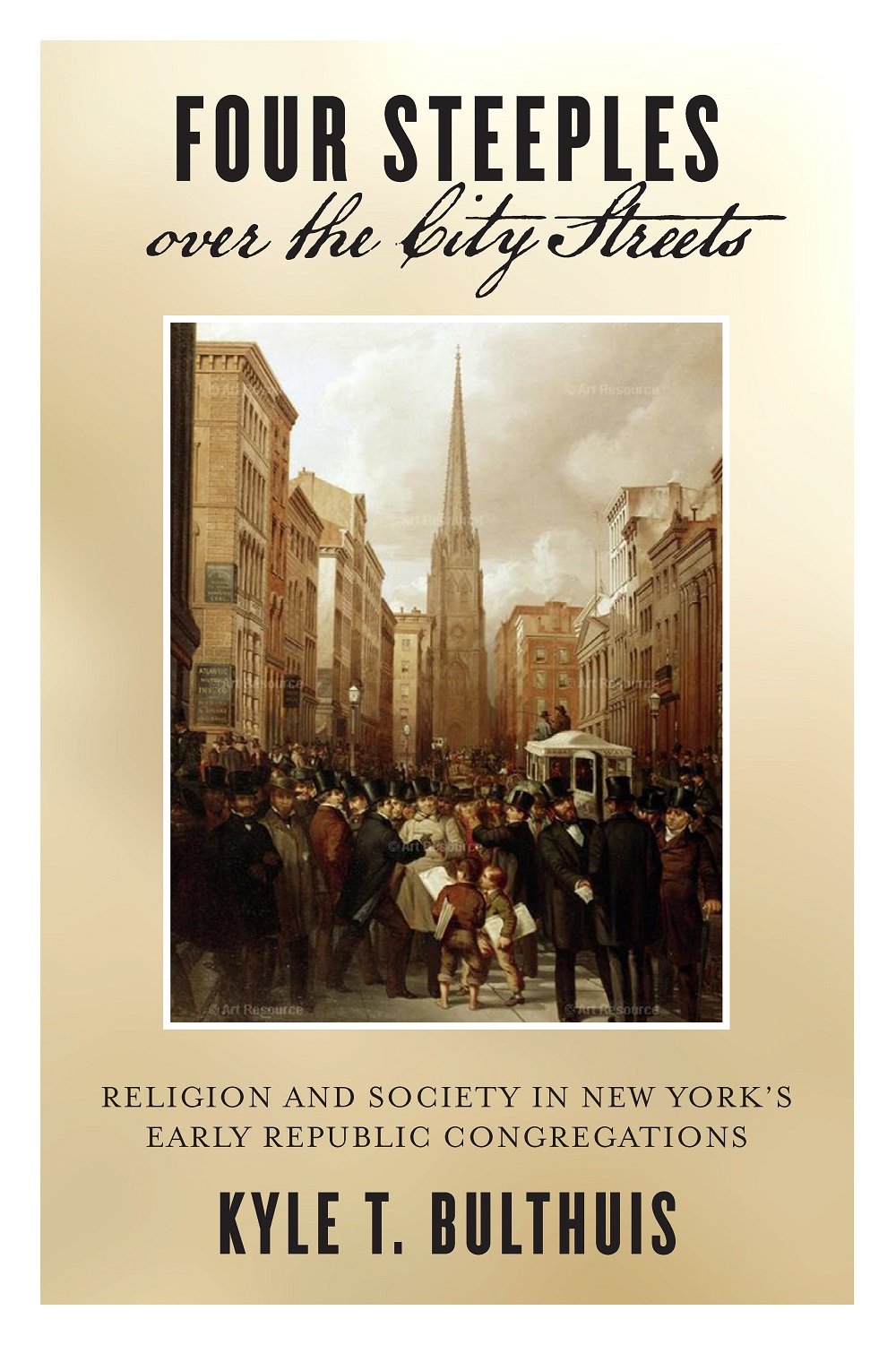 In many respects, Four Steeples over the City Streets is a story about different ways of being Anglican in New York City. It’s also a story about how external social changes influenced and threatened a vision of social order without destroying it. And it’s a story about how different kinds of New Yorkers in the early republic–black and white and male and female–experienced their community in religious terms. Continue reading
Winter Reads
Just in time for your holiday shopping list, here’s our preview of new titles—share your finds in the comments! Continue reading
Maryland Football and Public Memory of the War of 1812
 Earlier this week, the University of Maryland and their athletic uniform supplier, Under Armour, announced that the university’s football team “will wear football uniforms inspired by the 200th anniversary of the Battle of Baltimore and the writing of ‘The Star-Spangled Banner’ when it hosts West Virginia at Byrd Stadium” tomorrow, September 13.[1] The game will be played exactly 200 years to the day after Francis Scott Key penned “Defence of Fort McHenry,” a poem later set to music and adopted as the national anthem of the United States, which helped ensure that the all too oft-forgotten War of 1812 would retain some place in America’s collective memory. Continue reading
 The Junto
