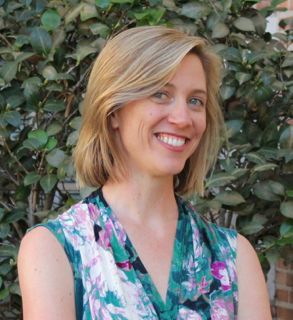
Today, Lindsay O’Neill, Assistant Professor of History at the University of Southern California, joins our weeklong discussion about sources and inspiration. Her first book, The Opened Letter: Networking in the Early Modern British World, was published by the University of Pennsylvania Press in 2015. Today she shares the sources that inspired (or haunted) her book-in-progress, titled “Barbarous Country: The Delogaon Princes and the British Empire, 1715-1725.”
I do not remember precisely when the princes began to haunt me. It might have been when I called up the ominous sounding “Book of Strangers” at the Huntington Library. This turned out to simply be a list of dinner guests at the Duke of Chandos’ estate of Cannons, but what I found inside was rather extraordinary. Listed at the Duke’s table on 24 September 1721 were “Two African Princes.” Intriguing, I thought. However, this must not have been the first time I came across a reference to them, for I remember knowing who these men were. I had, or would, read about them in letters from the Duke of Chandos who hosted the dinner. I would encounter them again in the letters of Sir John Perceval. And then again in the letters of Sir Hans Sloane. I told you these two men were haunting me. Now, there was no reason for them to. At the time, I was not interested in African princes. I was interested in letters since I was working on what would become my first book: The Opened Letter: Networking in the Early Modern British World. But it turned out that the loosely linked letter writers whose correspondence I was working my way through were interested in African princes and soon so was I. Continue reading


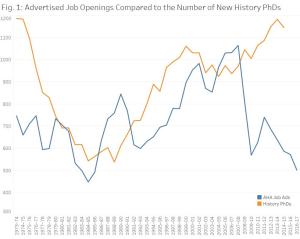 This week, the American Historical Association previewed a forthcoming report on the number of full-time history jobs. The post is entitled
  As an undergraduate, I didn’t take many large survey classes, and apart from one class, even the surveys that I took were taught by one faculty member. Larger U.S. universities do have more survey classes (I know, because I was a TA for several of them), but most that I taught on were also taught by one person. That model seems to be less usual in the United Kingdom, so I thought I’d talk about monster team-taught classes, the role of convener in bringing (and then holding) these classes together, and what you need to know about them if you’re considering the British job market.
 Here at The Junto, a group blog of early American historians, we’re looking for new voices to expand our coverage of this exciting field. We are seeking new members to further diversify the content of the blog and join our community of like-minded friends and scholars. New members commit to posting at least six times a year, and to helping with the blog’s administration. All Juntoists create and edit their own posts, solicit guest posts, organize interviews, reviews, and roundtables, and shape the direction of the blog. While unpaid, joining the Junto is a terrific opportunity to develop your public profile as a scholar and engage in an online intellectual community.
  I got involved with Race, Memory and the Digital Humanities Symposium (
 Impostor syndrome comes in many forms in academia, and this is how it comes for me: I shouldn’t be a doctor, because I never wrote a dissertation. I just wrote
 The Junto