
“How do you like them apples?” is probably not a good closing line for your letter.
With summer winding down and the fall semester upon us (or nearly so), that means it’s also time for those headed onto the job market to make sure their materials are in order as the first application deadlines approach. There’s lots of advice out there about how to do that (enough that I can’t begin to link to the many essays). But as I advanced from years on the job market into a position myself—including work on a department search—I’ve thought about what advice I would offer based on my perspective of the process. Rather than offer a bullet-point list of do’s and don’ts (though you can see those at the end), I’d like to provide some perspective on the audiences of the job letter. It’s a weird genre of writing, so it bears consideration as you put together your materials.
 Since the blog first launched in December 2012, we have published 794 posts. That is somewhere between 500,000 and 1,000,000 words of original content on early American history posted on the blog in less than 4 years. And since new readers find the blog regularly and our longtime readers may often have missed posts for various reasons, I want to use today’s post to simply make our readers aware of our back catalog and highlight the resources the blog has for accessing and making better use of it.
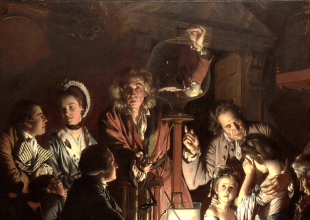
  International pageants such as World’s Fairs or Olympic Games are strange beasts of their very nature. While trying to project an image of a modern, vibrant place, they must necessarily also draw on the familiar in order to reach a wide audience. Sometimes this can be done in eye-catching and engaging fashion—think of the 2012 London Olympics, and their juxtaposition of Horse Guard’s Parade with beach volleyball. Thus these international pageants provide a curious mix of looking to the future at the same time as looking at the past.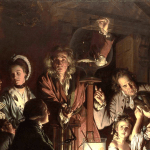
 Last week, an anonymous Ph.D. student published a Guardian op-ed under the headline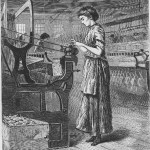
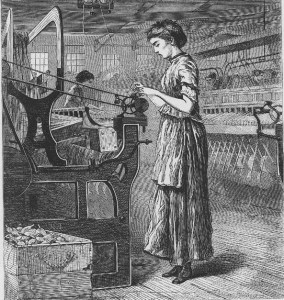 One of the best questions a historian can ask is, “what am I missing?” Whatever you’re investigating, and whatever stage you’re at, it’s always worth your while to step back and look around. If you’ve been focusing on something, using a particular lens, it can be pretty hard to pan out. That’s where setting aside time for more eclectic reading really helps—journals and blogs are convenient ways to keep your field of vision broad. Sometimes, they can give you a kick. That’s how I felt about the forum on women’s history in this summer’s issue of the Journal of the Early Republic.[1]
 If you haven’t noticed, the blog has been a bit, well, quiet lately. We promise that wasn’t all a hiccup! Well, most of it, anyway. About halfway through the summer we realized our productivity was lagging so we decided to call it a summer sabbatical—we are academics, after all.
 I thought going to Worcester for the OIEAHC

 The Junto