John M. Dixon, The Enlightenment of Cadwallader Colden: Empire, Science, and Intellectual Culture in British New York (Ithaca: Cornell University Press, 2016).
 On December 8, 1747, Gov. George Clinton (1686–1761) told a British statesman that the Assembly of New York “treated the person of the Governor with such contempt of his authority & such disrespect to the noble family where he had his birth that must be of most pernicious example.” He thought he might have to “give it [i.e., his position] up to a Faction.” The extant copy of this letter, held within Clinton’s papers at the William L. Clements Library in Michigan, was written by his most trusted advisor and ally—Cadwallader Colden, the subject of John M. Dixon’s first book, The Enlightenment of Cadwallader Colden: Empire, Science, and Intellectual Culture in British New York, published in 2016 by Cornell University Press.[1]

 With Hamilton’s sweep at the Tonys last night, this year’s phenomenal tide of Hamilton-mania has hit the high-water mark. You’ve cheered each much-deserved award and accolade, you’ve memorized every word of the soundtrack, you’ve devoured the #Hamiltome. Perhaps you’ve kept up with
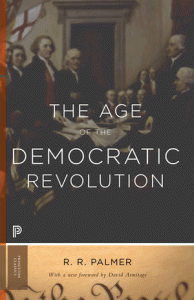 This past semester I taught a course on “18th Century Atlantic Revolutions: America, France, and Haiti,” which included both undergraduate and graduate students. (I wrote about the assigned readings at
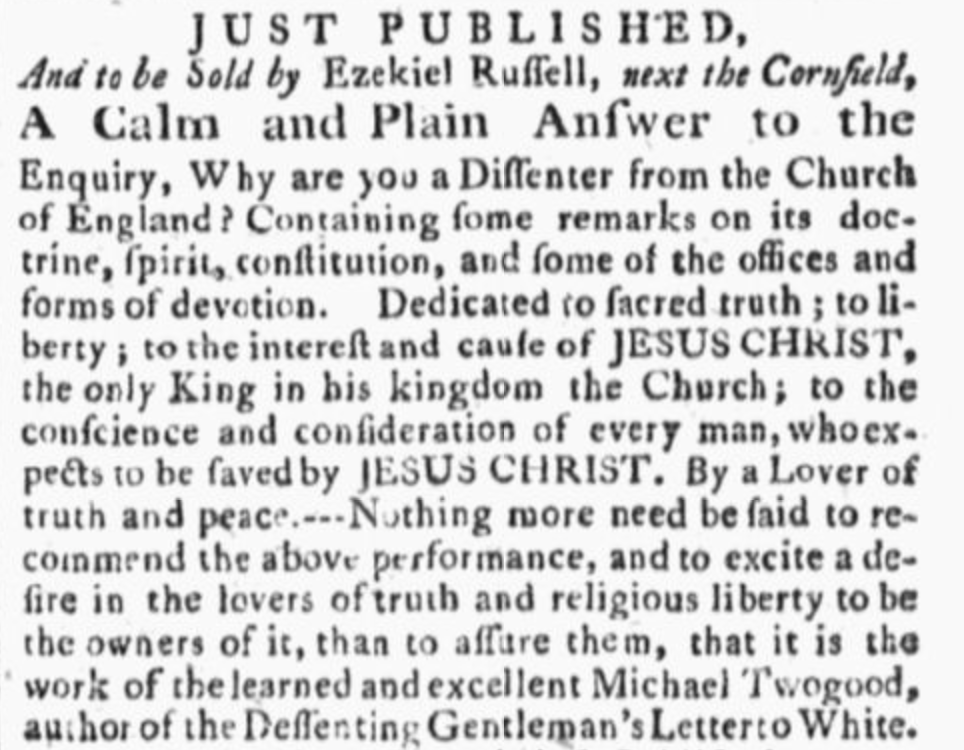
 On Sunday, the United States Postal Service
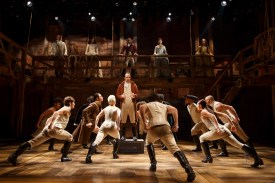 When I first listened to the Hamilton soundtrack last fall, the song “Farmer Refuted” caught my attention. The song stages a pamphlet war that began in November 1774 between Samuel Seabury, an Anglican minister in Westchester County, New York, and Alexander Hamilton, then an upstart New York college student. Their war of words over the First Continental Congress carried on for nearly four months and encompassed several tracts.[1]
  How does a crony capitalist son of a whore, and a militarist pumped up by delusional aspirations of honor, grow up to be feted by liberal scholars? [*]
 The Junto