Welcome to Founding Fiction, The Junto’s first roundtable exploring how children’s literature and young adult fiction depicts early American history. Between posts, we’ll compile a shelf of favorites to (re)read. Tweet us at #FoundingFiction or comment with your recommendations for Very Early Americanists. Happy summer, let’s dive in!
Today’s post is by Laura Ansley, Ph.D. candidate in history at the College of William & Mary, and managing editor of the Nursing Clio blog. Her dissertation is titled, “Life Problems: Sex Education in the United States, 1890-1930.” Follow her @lmansley.

Phillis Wheatley and Abigail Adams and Peggy Shippen and Harriet Hemings: all early American women whom I learned about from Ann Rinaldi’s young adult fiction. I have been fascinated by history for as long as I can remember, but Rinaldi was one of many authors who helped me to better understand what the best kind of historical study is. While school classes covering the Civil War may have talked about generals and battles, Rinaldi introduced me to characters like Osceola, stepdaughter of Wilmer McLean, who moved his family away from Manassas when the war came to the quieter Appomattox Courthouse—meaning the war started and ended on their doorstep. With her focus on teenage heroines, Rinaldi showed that history wasn’t only about important men. Young women experienced these historical events too, and their stories were also worth telling.
Continue reading
 As an agent and historian, I’m here to explain the process of finding an agent. Don’t worry—you can do this!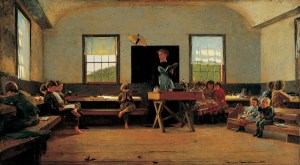

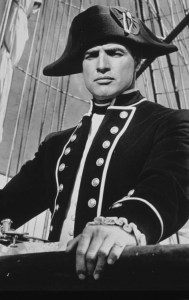 A few years ago, I was delivering my first lecture to a hall full of well over one hundred students. Thinking I would impress them with my popular culture knowledge, I included a reference to Captain Jack Sparrow as an example of the type of piracy I did not research, and one of the many forms of piracy in which they should not participate. Crickets ensued. Thankfully, my follow-up joke about the crickets landed better, but this left me all the more surprised when a student exiting the lecture swung by the front desk and made a quick reference to Marlon Brandon being a better sailor than Johnny Depp. Embarrassed though I am to admit, it was a reference I did not understand until about a month ago.
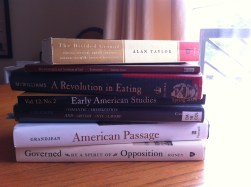 Historian Thomas Kidd recently published


 The Junto