 Happy Memorial Day to our readers in the United States. This week’s links begin with reminders about the origins of the holiday. Continue reading
Tag Archives: Slavery
Triggers in the Past
 Over the past few weeks, a discussion about trigger warnings has percolated across the blogosphere. Educators, op-ed columnists, and pundits have debated the use of these warnings about potentially upsetting content on syllabi or in the classroom (and leave it to the Chronicle to publish a disdainful mockery of the concept). As I’ve developed my courses, both at the survey and upper levels, I have confronted some of these same questions about the past: Is there anything in history from which we should shield our students? Or, to put it more broadly, how should we approach material that some of our students may find offensive, hurtful, or painful?
The Week in Early American History
You’ve worked hard all week. Your reward? Links, of course… Continue reading
Slavery, Abolition, and “Socialism” in the U.S. Congress
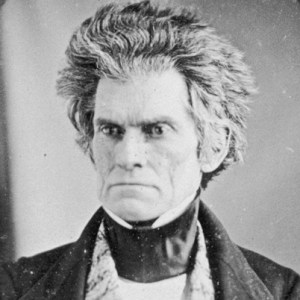 Ever since Richard Hofstadter called John C. Calhoun the “Marx of the Master Class,” at least, American historians have pondered the relationship between the pro-slavery critique of Northern wage labor and later left-wing critiques of capitalism. One of Calhoun’s great themes, as Hofstadter noted, was the inevitable “conflict between labor and capital,” a conflict that threatened to overwhelm the “free institutions” of the North. Continue reading
The Week in Early American History
Happy Sunday! With the excitement from March Madness still ringing through the halls at The Junto, we look forward to bringing you more great content on a wide range of issues in early American history in the coming weeks (including an interview with Mike Jarvis, our champion!). In the meantime, let’s head right to this week’s links!
Continue reading
The Week in Early American History
Well, technically, this will be the last two weeks in early American history since we missed last Sunday. Let’s get to it: Continue reading
The Week in Early American History
O March! You herald spring and blooms and sun!
But lest you fear a change too swift to speak,
I now present our tidings of the week. Continue reading
The Week in Early American History
 On to this week’s links…
Guest Post: “Libraries in the Atlantic World” Conference Recap
Today’s guest poster, Aaron M. Brunmeier, recaps the recent conference in Liverpool, England. He is a Ph.D. student at Loyola University-Chicago, where he studies print culture, gender, and the public sphere in revolutionary New York City. He is the social media assistant for the Community Libraries Network.

Last week, I finished my minor field exams, lesson-planned for my substitute teacher, and then hopped on a plane headed toward Liverpool for a conference on library history. It was the first of three colloquia organized by the Community Libraries Network and funded by the AHRC. This colloquium, “Libraries in the Atlantic World,” brought scholars of different disciplines from all around the world to share their research and discuss the newest trends in the field at the University of Liverpool, 24-25 Jan. 2014.
Guest Post: Sir James Wright and Jenny, his free “black servant”
Today’s guest poster is Greg Brooking (PhD, Georgia State University). His dissertation on Sir James Wright, royal governor of Georgia, is entitled, “‘My zeal for the real happiness of both Great Britain and the colonies’: The Conflicting Imperial Career of Sir James Wright.” He is the recipient of two fellowships from the David Library of the American Revolution and authored a chapter in General Nathanael Greene and the American Revolution in the South (University of South Carolina Press, 2012). He currently teaches at Kennesaw State University and Southern New Hampshire University. This is his first guest post for The Junto.
 I’ve just begun the arduous task of transforming my recently completed dissertation about colonial and revolutionary Georgia into a work worthy of an academic press. Part of this process, for me at least, has been to re-examine my notecards (actually an enormous Excel spreadsheet), seeking new gems, ideas, and angles. In so doing, I’ve rediscovered a tidbit that I want to further develop during the manuscript process and I humbly submit this post as a solicitation to the blog’s readers, seeking their varied and expert insights. Specifically, this tidbit relates to a caveat in the final will and testament of Sir James Wright (1716-1785), which calls for an annuity for his free “black servant,” Jenny. Continue reading
 The Junto