 Welcome to another addition of The Week in Early American History! Continue reading
Tag Archives: Slavery
The Week in Early American History
 Here in the United States, today is Memorial Day, a holiday originally created in the late 1860s to honor the Union Civil War dead, and now a time to commemorate all of America’s war dead. Because it’s also observed as a three-day weekend, we’re bringing you a special Monday holiday edition of The Week in Early American History. On to your morning reading…
The Week in Early American History
It’s commencement season around the United States, so we wish a hearty congratulations to all of our readers (and our students) graduating this month. Now, straight on to the links!
Q&A: Abigail Swingen, Competing Visions of Empire
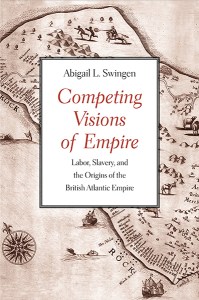 Abigail Swingen is an Assistant Professor of History at Texas Tech University (Lubbock, TX). She received her Ph.D. in History from the University of Chicago. She specializes in the Early Modern British Atlantic Political Economy. Competing Visions of Empire is her first book and was reviewed here yesterday. The following is part of our (relatively) new tradition of reviewing a book and then offering a Q & A with the author the following day. [NB: You can find my review from yesterday here.] Continue reading
Review: Abigail Swingen, Competing Visions of Empire
Abigail L. Swingen, Competing Visions of Empire: Labor, Slavery, and the Origins of the British Atlantic Empire (New Haven: Yale University Press, 2015).
There have been some fantastic new contributions of late that explore connections between slavery, economics, and empire. In his 2008 analysis of the American political economy, economic historian Gavin Wright concluded that the dependence on slave labor came not because of any institutional efficiency on the part of plantations, but rather, that no other form of coerced labor could have been made to meet the labor demands. Sven Beckart’s Bancroft Prize-winning book, Empire of Cotton, analyzes connections between cotton, and the slave labor behind it, and the rise of modern capitalism. Ed Baptist’s book, The Half Has Never Been Told, explores slavery’s role in the making of American capitalism.
Guest Post: Disaster, Death, and Distilleries
Today’s guest post comes from Jordan Smith, a PhD Candidate in Atlantic History at Georgetown University. His dissertation, “The Invention of Rum,” investigates the development and production of rum in the seventeenth and eighteenth-century Atlantic World.
Warning: This post contains graphic accounts of industrial accidents.
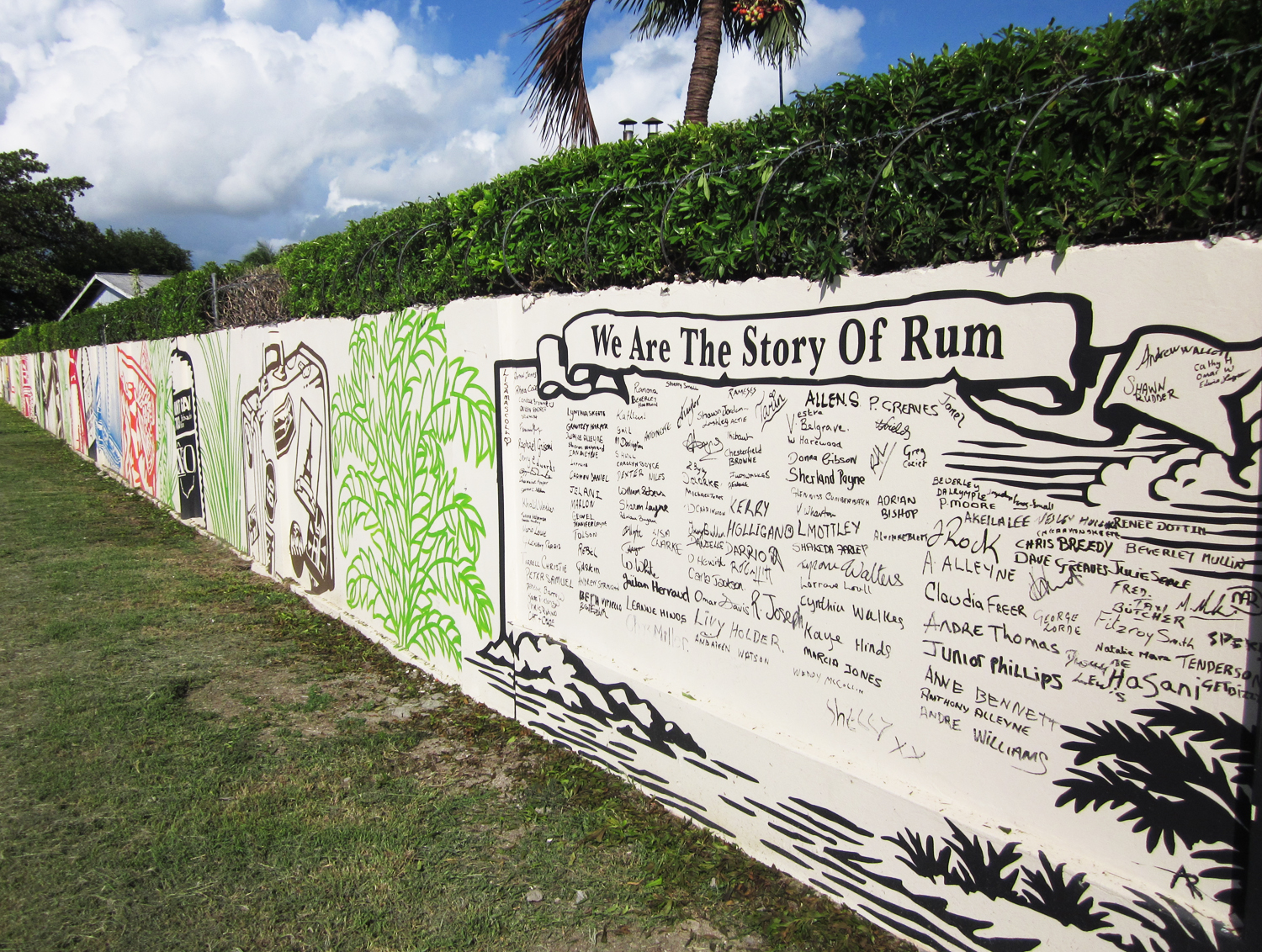 On a recent research trip to Barbados, I stopped by the Mount Gay Visitors Center. There, between tastes of a variety of rums, tour guides regaled me with a heroic tale of Barbados’s place in the invention of rum. Afterwards, I was handed a brochure which proclaimed Mount Gay to be “the rum that invented rum.” The reasoning for this marketing strategy is simple enough—Mount Gay is one of many distilleries that makes a financial killing off of linking their product to a happy history of ingenuity and originality. Yet accounts of eighteenth-century distillery disasters suggest that this invention and innovation of rum was often undergirded by shocking violence. Continue reading
The Week in Early American History
This has been a momentous week for early Americanists, with the 150th anniversary of the Lincoln assassination to start the week and, especially for those of us in Massachusetts, the annual commemorations of Patriot’s Day this weekend. We have lots of great links for you below the fold!
Spring Reads
 Here’s our seasonal roundup of new and forthcoming titles. Share your finds below! Continue reading
The Week in Early American History
Here are your links this week, broken into cleverly categorized paragraphs! Continue reading
Bernard Bailyn’s Last Act?: An Interview with the Harvard Historian on His New Book
 Bernard Bailyn’s contribution to our understanding of early American history is so vast that it’s easy to forget he’s still publishing books. His writings on the American Revolution, begun in the 1960s, remain required reading for any doctoral student studying for orals. And even since retiring from Harvard a quarter century ago, he’s continued to influence the field, perhaps nowhere more than through his promotion of Atlantic history.
Yet even at 92, Bailyn isn’t finished. His new book, Sometimes An Art: Nine Essays on History (Knopf), can be read in a number of ways: as an introduction to his vast corpus of work; a chance to respond to his critics; a reflection on the meaning of history; and, perhaps, a summing up of sorts. “It reflects some of my own work over the years,” Bailyn told me during an interview from Boston. The essays he’s chosen to include, dating from 1954 to 2007, have only appeared in either obscure publications or dated back issues of prominent journals. But in one way or another, he said, they “concentrate on certain major themes” in all his work. Continue reading
 The Junto