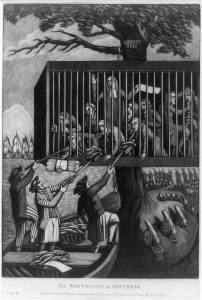
 Today, Rachel Herrmann concludes our food roundtable. You can read Carla Cevasco’s introduction here, Zachary Bennett’s post here, Bertie Mandelblatt’s here, and Rachel Winchcombe’s here. We hope we gave you some things to think about.
This week I spent three days reading three books, and I watched these posts go out into the world while thinking about my comps. I remember my comps year as the year of graduate school when I was more stressed than I can ever recall feeling, for such a protracted period of time, in my life.[1] But I think that it was the state of food history in 2009-10, when I was reading for my comps, that contributed to this feeling of panic.
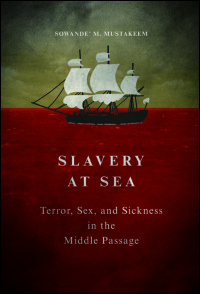
I don’t mean the state of food studies; that discipline was already healthily expanding. I mean food history. I found comprehensive exams stressful because I knew that I wanted most to speak to early Americanists and early Atlanticists (and I think the distinction was more pronounced back then), but I was not convinced that there were very many early American food histories. There were food histories on other periods and other geographies; there were food studies books on single commodities like sugar and chicken and interdisciplinary food studies collections with foundational essays on method; there was some relevant work on alcohol, and on animals; and it felt like there was no roadmap for my dissertation.[2] Continue reading
 Calling all contributors!
 Late last week, Americans learned about an armed takeover of a federal wildlife refuge in Oregon. It was initiated by a group of men who have an
 It’s increasingly clear that, while the era of grand syntheses may be over, there will be no shortage of provocative new work on the American Revolution. Last week the Huntington Library hosted the third major conference on the revolution in as many years, following those organised by the
 So you know what’s hilarious? Trying to revise your dissertation into a book during the semester. I will admit that I am in the middle of editing my worst dissertation chapter, and am yelling out of a metaphorical pit of despair that’s been dug by a combination of bad prose and end-of-the-semester angst. Part of these struggles have to do with the fact that even after writing the chapter, submitting it, and defending it, I’m still not really sure what this chapter’s argument needs to say. This problem is directly tied to the fact that I found (and continue to find) myself befuddled by late-eighteenth-century Southern Indian affairs. So many factions! So much switching of sides! So many different ways I manage to mis-type Scots-Creek go-between Alexander McGillivray’s last name!
 The Junto