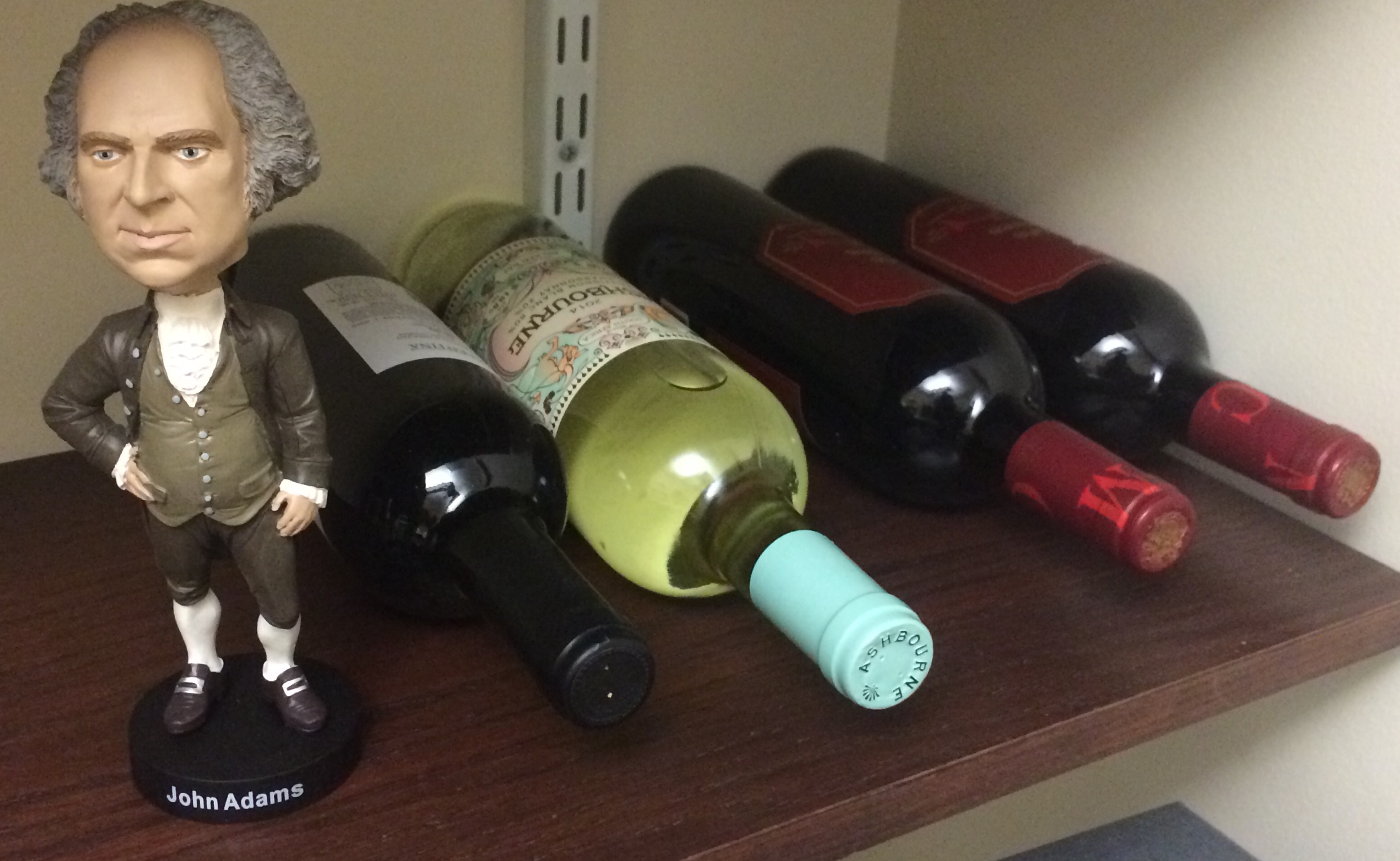
 Happy 280th birthday to President John Adams: lawyer, statesman, and…wine connoisseur? He began a crisp New England morning like today with a tankard of hard cider, but Adams’ years in Europe primed his palate for fine French wine. Continue reading
Author Archives: Sara Georgini
The Junto Goes to Washington: #USIH15 Preview
 Well, we kinda asked for it, and our good colleagues at the U.S. Society for Intellectual Society heard us. When their annual conference gets underway this evening in Washington, D.C., several Junto bloggers will be there, joining other early Americanists in bringing some new research questions to the table. (For the details of the two Junto-sponsored panels this weekend, look below the fold.) We look forward to hearing all the intellectual history that we can, from a keynote by Corey Robin to diverse plenary sessions featuring Russell Jacoby, Archivist of the United States David Ferriero, Smithsonian curators, and a host more of thinkers and their publics. See you in D.C.! Continue reading
History & Story
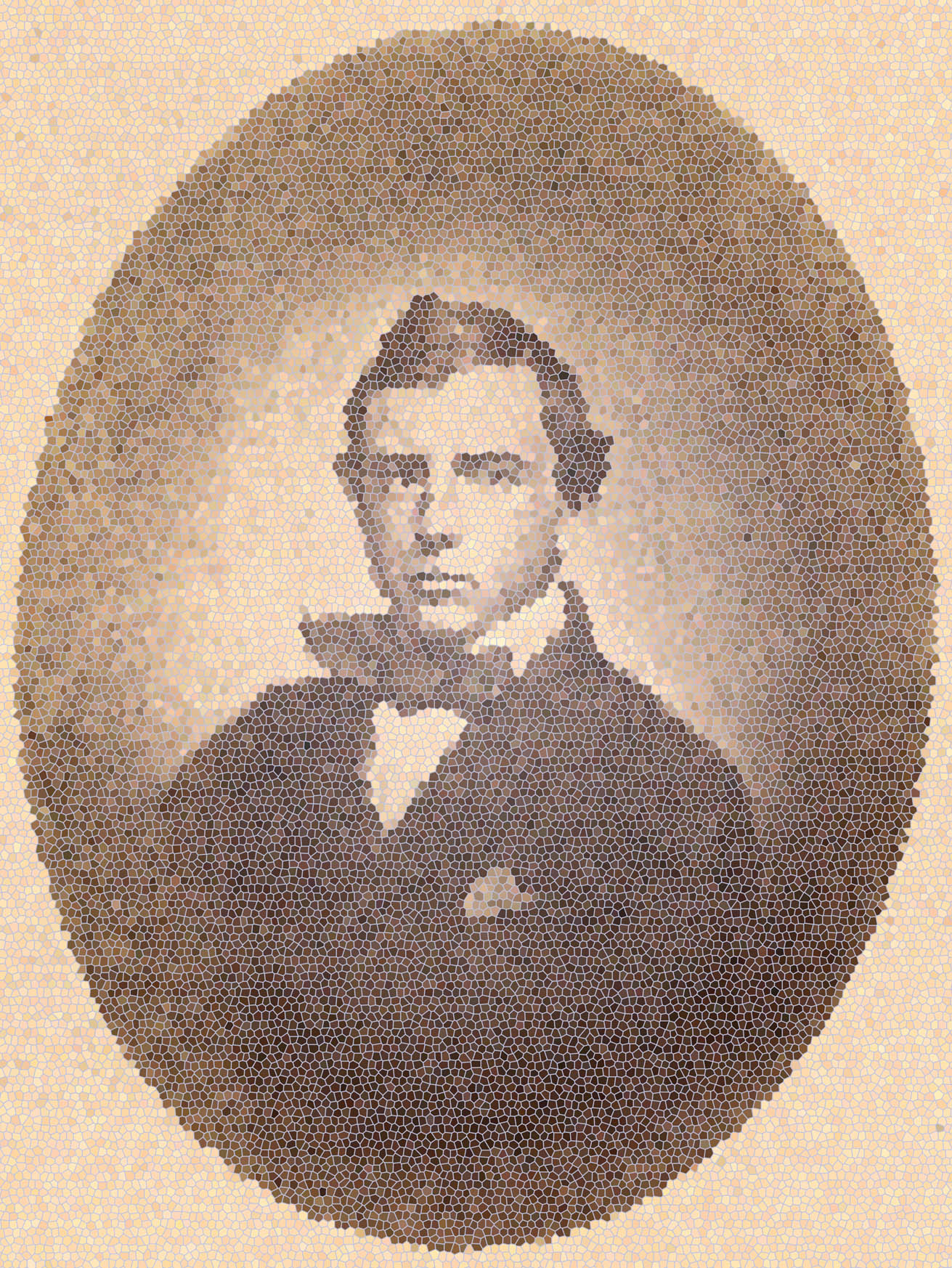 Once or twice upon a chapter, as you work to tell history as story, take comfort in knowing that even American sage Henry Adams sometimes had a not-great writing day. By 1878, the 40-year-old Harvard professor of medieval history was a polished scholar. Hailing from a family that wrote for the archive, he navigated easily the uncatalogued byways of an early Library of Congress. He swept up obscure state records and gathered local maps for his 9-volume History of the United States. As editor of the North American Review, Henry instructed freelancers to write “in bald style.” He sliced his private letters down to acid cultural commentary that, to the modern reader, feels meta-enough to border on code. Continue reading
Autumn Reads

“Valley of the Catawissa in Autumn,” Thomas Moran (ca. 1862)
Fall brings new early American titles to explore. Enjoy our Spring Reads 2015 list, too, and share your finds below!
Guest Post: Slave Horse: The Narragansett Pacer
Today, The Junto welcomes guest poster Charlotte Carrington-Farmer, Assistant Professor of History at Roger Williams University. Her current research focuses on framing dissent, deviance, and crime in early America in a wider Atlantic World context.
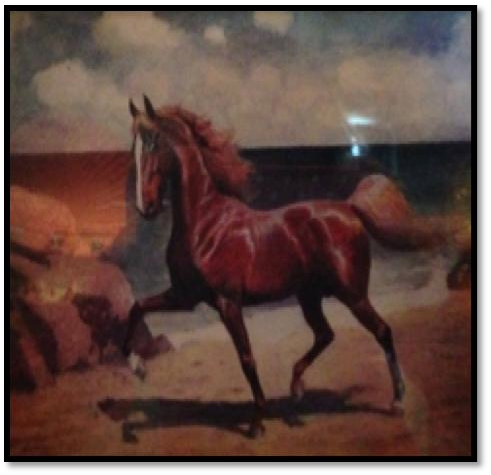
Image via Ann Holst and Pettaquamscutt Historical Society, Kingston, Rhode Island
Once considered a breed of “no beauty,” the Narragansett Pacer moved fast enough for an 18th-century rider to cover 50-60 miles a day of rocky New England ground. As a natural pacer, its backbone moved through the air in a straight line without inclining the rider from side to side. Bred in and named for a southern community of coastal Rhode Island, the story of Narragansett Pacer horse is tightly entwined with the history of the early slave trade. Throughout the 18th and 19th centuries, these horses were traded for rum, sugar and slaves. Often, the horses were raised by slaves on the plantations of Narragansett, then shipped around the Atlantic World to work on sugar plantations alongside other slaves. Continue reading
After the Trail

Oglala Sioux Shield, ca. 1846
Consider the sixth-grader of 1907. Gertrude F. Greene’s syllabus passed over Plato, sidelined Scottish ballads, and resisted the Alaskan derring-do of The Fur-Seal’s Tooth. At the top of her reading list—first to devour on a snowy winter break from the old Belcher School—she ranked Francis Parkman’s Oregon Trail (1849). In under a century, Parkman had gone from cliffhanger to canon. Why? What might students learn from a 23-year-old romantic historian’s rambles in the Indian country of 1846? Glints of Parkman’s early artistry shone through, but only when you shook up the story a bit. His sketch of life with the Oglala Sioux melded ethnography and emotion, sense and sensation. His Oregon Trail had been greatly curated, edited, and revised in the retelling. And yet Ms. Greene’s sixth-graders missed out on the juicier bits. What Parkman saw (“a strange variety of characters”), what Parkman heard (“harsh and guttaral” dialects), and what Parkman ate (buffalo, fish, dog) on the road filled his private journals, first made available to readers in the 1940s. There, stashed away in the “no-filter” notebooks that Parkman used to piece together his first blockbuster, lay the real adventure. Continue reading
Before the Trail

Francis Parkman’s Medicine Chest
Pratt must be paid. There was a route to examine one last time, and three shirts to stuff into a knapsack bulging with flannels and history books, powder and shot. The Berkshire Hills trip was a rush job; he needed to return for graduation in late August, 1844. Into the knapsack went a 4” x 2½” dusky-green journal, with shorthand notes in pencil. After a boyhood spent hunting and riding bareback on the Medford frontier, the blue-eyed Harvard senior, 20, knew how to pack for a research errand into the wilderness. Already, he boasted colorful adventures from past summer forays, fine-tuning the field skills that history professor Jared Sparks did not cover in class. Take July 1841: Scaling his first New Hampshire ravine, the rookie historian slipped and swung free, clawing air. As he “shuddered” and clung to the crag, a hard sheaf of pebbles fell, “clattering hundreds of feet” to the sunny gulf below.
The Many & the One
 Like many, Amos Doolittle struggled to turn in a decent first draft of American history. The 21 year-old engraver, later known as the “Paul Revere of Connecticut,” arrived in Lexington and Concord shortly after April 1775. Anxious to capture the battles’ action and aftermath, he chatted with local residents. He sketched terrain. For Doolittle, a trained silversmith, it was a chance to experiment with a craft he had yet to master. Part of what he produced, a set of four views storyboarding the “shot heard round the world,” hangs in the Boston Public Library’s new exhibit, “We Are One: Mapping America’s Road from Revolution to Independence.” By Doolittle’s lights, Massachusetts makes for a furious and frenzied tableau: gusts of redcoats’ gunpowder hazing the sky, and colonial ranks splintering on the advance. On the American side, it is hardly a picture of union. Patriots scatter, racing blindly to frame’s edge. In his rough draft of Revolution, Amos Doolittle demands that we unlock all hopes of what might come next. Continue reading
Set in Stone
 Every president has a past, and to his regret, John Adams did not save all of it for history’s sake. “Whatever you write preserve,” he directed his grandsons in 1815. “I have burned, Bushells of my Silly notes, in fitts of Impatience and humiliation, which I would now give anything to recover.” Continue reading
Natural Histories

See the world through Hannah Winthrop’s eyes. Your gaze dips down into the high-polished tea table and shears past John Singleton Copley’s brush, into summer 1773. Shown here serenely grasping a nectarine branch, Hannah likely knew that her world—what she called the “same little peaceful circle”—was spinning into a new revolution. Continue reading
 The Junto