 Today at The Junto, we’re featuring an interview with Alejandra Dubcovsky about her new book, Informed Power: Communication in the Early American South, which Jessica Parr reviewed yesterday. Alejandra Dubcovsky is an Assistant Professor of History at Yale (and soon an Assistant Professor of history at UC Riverside). She earned her BA and PhD from UC Berkeley. She also has a Masters in Library and Information Sciences from San Jose State. She was born and raised in Buenos Aires, Argentina. Her work has appeared in Ethnohistory, The William and Mary Quarterly, and Native South. Continue reading
Review: Alejandra Dubcovsky, Informed Power: Communication in the Early American South
Alejandra Dubcovsky, Informed Power: Communication in the Early American South (Cambridge: Harvard University Press, 2016).
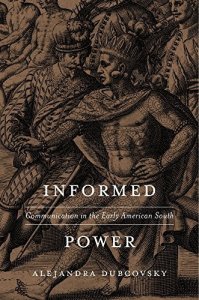 Alejandra Dubcovsky’s Informed Power: Communication in the Early American South is an ambitious book. She analyzes how information was communicated throughout the early South, a region that was without a regular mail system or print culture prior to 1730. The “early South,” as Dubcovsky acknowledges, is an “ambiguous” term (3). Her “early South” includes much of the lands from the Jamestown settlement south, and from the Mississippi River east. The result is a vibrant blend of Native American peoples, Africans, and European interactions that both complicate and enrich her analysis. Her sources include not only English, French, and Spanish, but also a number of Native American sources, including Timucua. She draws not only on written sources, but linguistic and archaeological evidence as well. This interdisciplinary approach allowed for broader inclusion of non-European networks than appears in many studies. Networks, as Dubcovsky defines them, are a “pattern of ties connecting discrete places or peoples”(4) She discusses a number of different types of networks—economic, political, religious, diplomatic, subaltern—but depicts all nodes as uniform in size. While some might take issue with this approach, the uniformness of the nodes makes sense, given the book’s goal of decentralizing European power structures, and does not detract. Continue reading
What Happened to the “Democratic” in the “Age of Democratic Revolutions”?
 This past semester I taught a course on “18th Century Atlantic Revolutions: America, France, and Haiti,” which included both undergraduate and graduate students. (I wrote about the assigned readings at my personal blog.) I’d like to highlight a central theme that I emphasized throughout the course as a way to discuss historiographical and pedagogical questions.
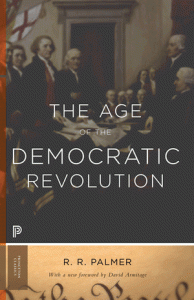
To give my grad students a sense of the field’s starting point, I had them read R. R. Palmer’s classic 2-volume The Age of Democratic Revolution: A Political History of Europe and America, 1760-1800 (1959, 1964; 2014), recently combined and re-published by Princeton University Press. Advancing through the semester and reading much more recent books, the dated nature of Palmer’s book is readily apparent. Most obvious is its avoidance of Haiti. (At an AHA panel on the Age of Revolutions last January, Nathaniel Perl-Rosenthal mention that it’s basically an academic ritual to mention this whenever discussing Age of Democratic Revolution.) Palmer also focuses on high-end (and male-centric) intellectual history, ignores economic interests and intersections, and only engages the nations whose revolutions “succeeded.” This last point is obviously problematic, of course, given what happens in France after their Revolution. But as Janet Polasky’s recent book shows, a more comprehensive view can be gleaned through looking at revolutionary moments that did not have successful outcomes. Like any book published over a half-century ago, even a classic book like Palmer’s, there are plenty of holes to acknowledge. Continue reading
What Do Early Americanists Offer the Liberal Arts?
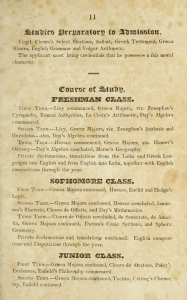
Perhaps because the traditional academic year has ended, and probably in part because of the tides and undertows of the current election, we seem to be awash just now in excellent essays about the purposes and state of the humanities.
To do my part to put a stop to that, I am here to ask what the liberal arts have to do with early American studies.
I suspect we tend to take the relationship too much for granted.
The Sacred and the Secular in Early National Virginia
 Is revolutionary Virginia the birthplace of American secularism?
My attention was returned to this critical question by a recent twitter exchange between Annette Gordon-Reed and Sam Haselby (and others) along side a recent piece by Haselby in Aeon.[1] The scuffle between Gordon-Reed and Haselby focuses on the time-is-a-flat-circle question of Thomas Jefferson’s religious beliefs. Was he a secularist? Some variant of Christian? A Unitarian? An atheist? Haselby’s Aeon piece takes a different tack, arguing that the American founding represented a “rogue wave of rationality in a centuries-long sea of Protestant evangelising, sectarianism and God-talk.” Haselby marks out the Founders—particularly Jefferson and James Madison—as “visionary secularists” who created a secular republic, which was eventually co-opt by decidedly non-secular political and cultural forces. He singles out late eighteenth-century Virginia as the primary canvas upon which the great artists of American secularism worked.[2] Continue reading
Guest Post: How Do We Find Religion in the American Revolution?
Kate Carté Engel is an associate professor of history at Southern Methodist University. She is the author of Religion and Profit: Moravians in Early America (Philadelphia: University of Pennsylvania Press, 2009), and she is currently writing a history of international protestantism and the American Revolution.
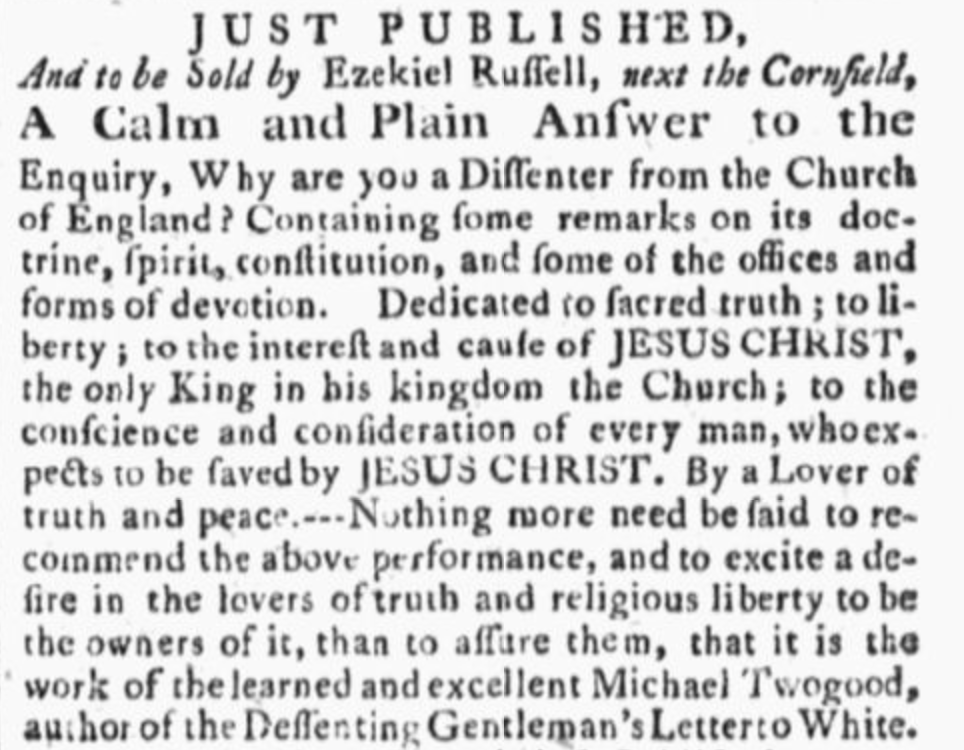 On May 17, 1773, an advertisement appeared in the Massachusetts Gazette for a new book by English dissenting minister Micaiah Towgood (misidentified in the advertisement as Michael Twogood). The ad is interesting because it is one of only 67 items in that come up in a search of Readex’s American Historical Newspapers database for the period between 1764 and 1789 containing a particular trifecta of terms: “Jesus Christ,” “liberty”, and (to get both religion and cognates like religious and religiously) “religio*”.
Q&A: Zachary Hutchins, editor of Community without Consent: New Perspectives on the Stamp Act
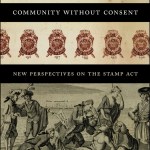
 On Sunday, the United States Postal Service introduced a stamp commemorating the 250th anniversary of the repeal of the Stamp Act. Today we are pleased to present an interview with Zachary Hutchins, editor of a new collection of essays from Dartmouth College Press that challenges traditional understandings of the Stamp Act Crisis as (in the words of the USPS) “setting [the colonists] on a path toward revolution and independence.” Zach is an Assistant Professor of English at Colorado State University. In 2014 he published his first book, Inventing Eden: Primitivism, Millennialism, and the Making of New England. A 2016 Fellow of the National Endowment for the Humanities, Hutchins is currently completing his second monograph, Before Equiano: A Prehistory of the North American Slave Narrative. Continue reading
Guest Post: More Atlantic Archives
Today, The Junto concludes its series on “Archives around the Atlantic” with a guest post from Patrick Johnson about working in the General Archive of Mexico. Patrick Johnson is a PhD candidate in Anthropology at William and Mary, you can read about research and fieldwork from him and other anthropologists at their new blog.
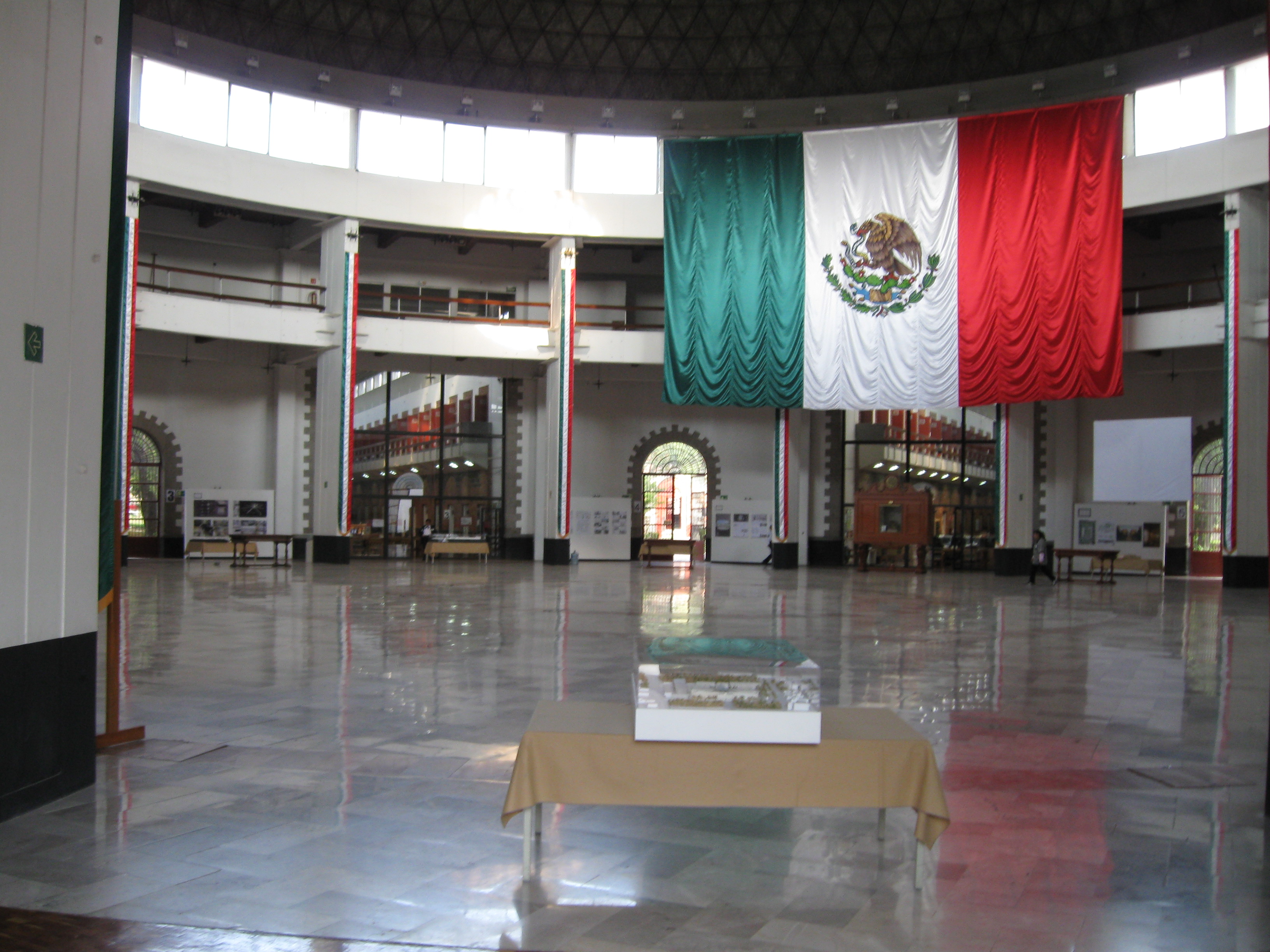 Great posts at The Junto about archival work in Spain, France, England, Jamaica, and the United States got me thinking about my own archival work in 2010 in Mexico City. And, while the Archive of the Indies receives well-deserved attention from historians, Spanish archives in Mexico and collections in the US remain underutilized for understanding not only territories occupied by the Spanish but also colonialism in the present-day United States. Continue reading
Call for Papers: 2016-17 Missouri Regional Seminar on Early American History
The following link comes from the Kinder Institute on Constitutional Democracy’s announcement. I was privileged to be a postdoc fellow with the Kinder Institute for the last two years and attended most of these MRSEAH meetings. They are phenomenal. Bonus: you get to hang out with our own Ken Owen!
 The Kinder Institute is currently inviting submissions for presenters at the 2016-17 meetings of the Missouri Regional Seminar on Early American History (MRSEAH), which will be held on October 7, 2016, and April 21, 2017, in Columbia, MO, and on November 4, 2016, and February 17, 2017, in St. Louis. We welcome work on all aspects of early American history, broadly defined to extend throughout the Americas geographically and forward in time through the 19th century, and we are especially eager for submissions relating to political development, political thought, constitutionalism, and democratization. All MRSEAH submissions will also automatically be considered for the Kinder Institute’s Friday History Colloquium Series, held on campus during the academic year. Please visit the link below for complete instructions on submitting a proposal to present at the MRSEAH. Continue reading
Guest Post: Reporting from the Edges of Exceptionalism: Early American History in Oceania in 2016
Today’s post is by Taylor Spence, a Lecturer in Monash University’s School of Philosophical, Historical and International Studies and a Research Fellow with the Monash Indigenous Centre. Agricultural History will publish Dr. Spence’s next article, “The Canada Thistle: The Pestilence of North American Colonialisms and the Emergence of an Exceptionalist Identity, 1783-1839” (vol. 90, no.3), this fall. He lives in Melbourne and Brooklyn.
 As a local representative of American Empire in Melbourne, Australia, and fifteen years after Michael McGerr and Ian Tyrrell’s spirited exchange in the pages of the American Historical Review, in which they wrestled with the potential gains and losses of a transnational American history, I thought it was time, in the spirit of Alistair Cooke, to send a “Letter to America,” checking in on the topic of American Exceptionalism and the viability of the transnational historical project in Oceania.[1] Reporting from the front lines of the outward-pression of the exceptionalist frontier, I can report that it has only partially been successful: you in the U.S. have much more work to do if you hope to bring Australians to worship at the altar of Washington, Hamilton, and Lincoln. Perhaps a touring company of Hamilton would be in order? But if, in all seriousness, the continued popularity of American history courses at my Australian university and a similar lack of popularity for Australian history courses attests to the successful mystification of a certain segment of the population, the clear-eyed work of Oceanic Early Americanists demonstrates that the U.S. metanarrative is but grist for the mill. For decades, now, these scholars have produced an unabating stream of masterful transnational studies, which are methodically eroding the exceptionalist juggernaut. Continue reading
 The Junto