Live Coverage of “So Sudden an Alteration” Conference

As you know from last week’s posts by Michael and Ken, this weekend is the second major conference in two years on the American Revolution, So Sudden an Alteration, hosted by the Massachusetts Historical Society.

There have already been a number of great papers, and some hot debates on the meaning of studying the Revolution, with more to come today.

We will have full coverage next week, but in the meantime, you can keep up with the conference on Twitter by following the hashtag, #RevReborn2, or Juntoists at the conference, including me (@jmadelman), Jessica Parr (@ProvAtlantic), Michael Hattem (@MichaelHattem), and Tom Cutterham (@tomcutterham).

You can also follow several friends of the blog: Liz Covart (@lizcovart), John Bell (@Boston1775), and the MHS institutional account (@MHS1791).

UPDATE (4/12, 8pm): Now that the conference is over, you can also check out several summations of the conference.

Michael Hattem created a Storify for each of the three days of the conference:

Day 1
Day 2
Day 3

And there is also a more basic archive of tweets and an interactive explorer.
Interview: Liz Covart of Ben Franklin’s World

ben_franklins_worldLast week, The JuntoCasters—aka Ken Owen, Roy Rogers, and myself— appeared on the new, fast-growing podcast hosted by Liz Covart called Ben Franklin’s World, an interview-based early American history podcast that launched in October 2014. Already, the podcast has a catalogue of twenty-four episodes and a rapidly growing audience. Most episodes feature Liz interviewing a historian/author about a recent book and some of her past guests have included such notable historians as Alan Taylor, François Furstenberg, Claudio Saunt, Joyce Chaplin, and James Green, as well as The Junto’s own Sara Georgini for an episode about John and Abigail Adams and the Adams Papers. Continue reading

Spring Reads

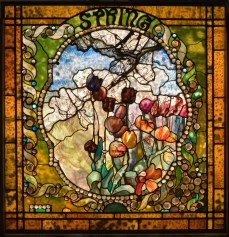
Spring_panel_from_the_Four_Seasons_leaded-glass_window_by_Louis_Comfort_TiffanyHere’s our seasonal roundup of new and forthcoming titles. Share your finds below!  Continue reading
No Politics, No Revolution

If there is a current orthodoxy among historians of the American Revolution, it is that the study of the Revolution has lost its focus. In their introduction to the Common-Place edition recapping the McNeil Center’s “The American Revolution Reborn” conference, Patrick Spero and Michael Zuckerman wrote of “a field that had grown stale” and that was “losing its verve, and worse, its center.” The call for papers for the forthcoming Massachusetts Historical Society conference effectively described the field as being stuck in a historiographical rut. There is a reason that study of the Revolution has lost its center. It has failed to concentrate its focus on politics. Continue reading

Junto March Madness: Final Four Results AND Championship Voting

JMM15March is over, but March Madness is still here, and can only survive with the help of your votes! Clap your hands if you believe in fairies!

And by “fairies,” I really mean brackets; you can find the original bracket here.

The championship game promises to be close. Click through for results on the Final Four, and to see you championship matchup.

Continue reading

This Week in Early American History

TWEAHWelcome to another edition of This Week in Early American History! We wish a safe and healthy holiday to those who are observing Easter this weekend, and a Chag Kasher V’Sameach to those who are celebrating Passover. Now, on to the links….
Continue reading

When Sources Talk Back

When Sources Talk Back

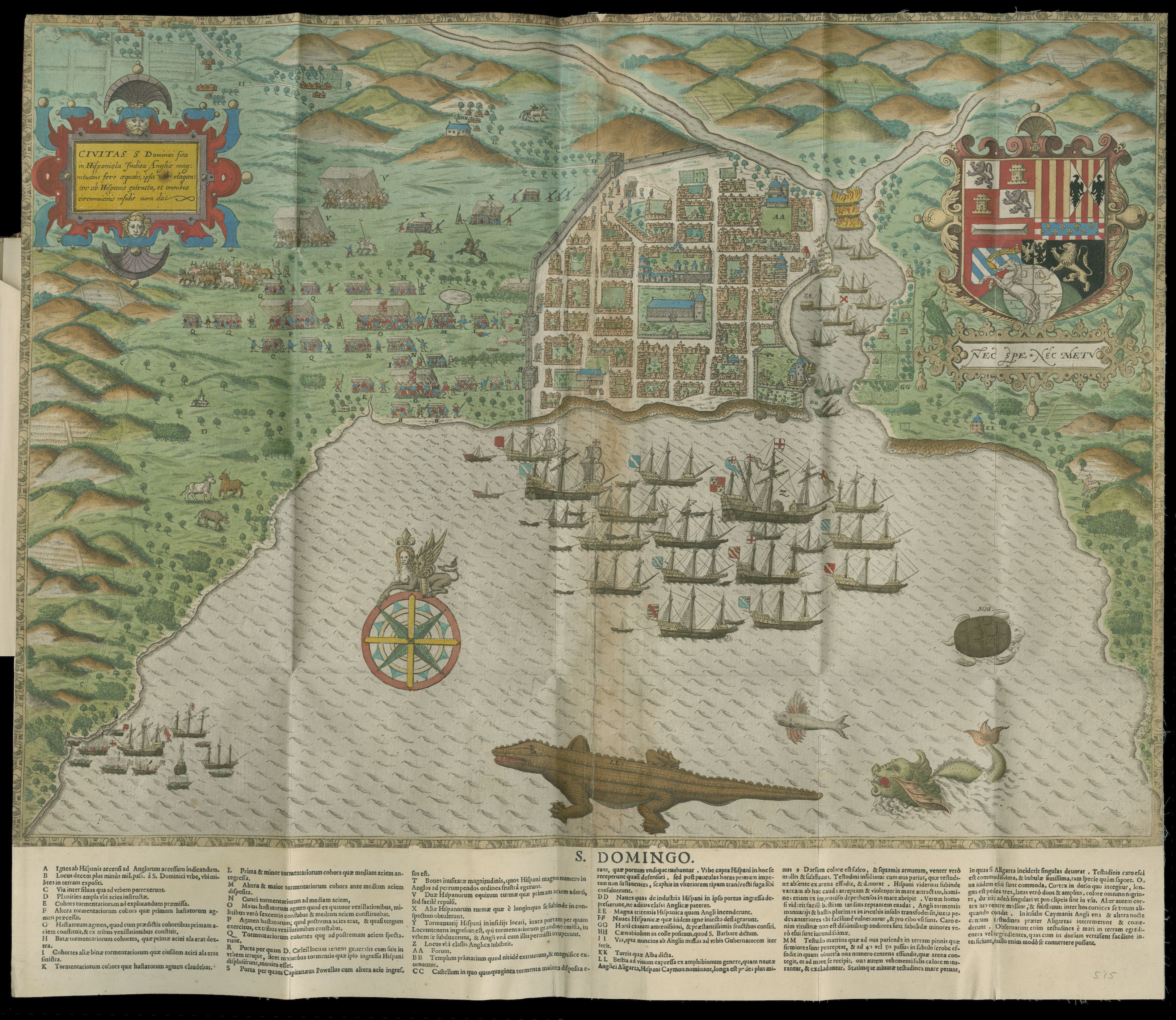
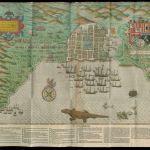
Boazio_Battle-of-Santo-Domingo

How do we select the sources we use? How do we approach those sources once we’ve selected them? What does that process do to the stories we eventually tell about the past? And, what happens when our sources disagree with the choices we’ve made?

That last question is one that historians working on the early modern period rarely have to grapple with – after all, the individuals who wrote the letters, manuscripts, and account books that we read have been dead for a very long time. And, it is an issue that I’ve blithely ignored until I read Manuel Gonzalez Pallano Tinoco’s “Narrative of the Invasion of La Española, Santo Domingo, which the English Attempted in 1655.” It is near the end of Captain Tinoco’s detailed description of the failed English invasion of Spanish Santo Domingo that this long-deceased chronicler called out future historians who would use his narrative on any but his own terms. And, his reasoning was compelling enough to make me question my own methodology in using his history in my work. Continue reading

Have Cultural Historians Lost the American Revolution?

In just over a week from now, the Massachusetts Historical Society is hosting, “‘So Sudden an Alteration’: The Causes, Course, and Consequences of the American Revolution,” an important conference on the American Revolution in recognition of the the 250th anniversary of the Stamp Act. This is the second of three conferences dedicated to rediscovering or re-energizing study of the American Revolution, the first of which, “The American Revolution Reborn,” was hosted by the McNeil Center for Early American Studies in the spring of 2013. And so with the conference fast approaching, I want to use this piece to think about the specific moment and circumstances in which American Revolution studies currently finds itself, which has been the catalyst for this series of conferences, and suggest possibilities going forward. The primary circumstance of that moment, with which many seem to agree, is that the study of the Revolution is in a rut, plodding along in the same “well-worn grooves of historical inquiry” for the “past fifty years,” according to the conference’s call for papers. Continue reading

Junto March Madness: Final Four Voting

JMM15Well, we’ve made it. March is almost over basketball is winding down, midterms have come and gone, and JUNTO MARCH MADNESS MARCHES ON!!!!

If you want to be reminded of how we got here, here’s the original bracket.

Is Benjamin Franklin the #EarlyAmHist version of Kentucky, destined for domination? Will the contested principles of the Declaration of Independence win the game? Do I have to keep coming up with corny rhetorical questions? Only one more week to find out!

For the Final Four, you have an entire week to vote. So spread the word! As they say in Chicago, vote early and vote often. Continue reading