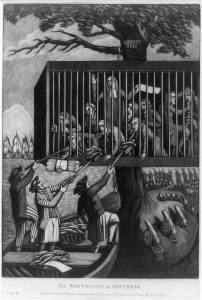
 Today, Rachel Herrmann concludes our food roundtable. You can read Carla Cevasco’s introduction here, Zachary Bennett’s post here, Bertie Mandelblatt’s here, and Rachel Winchcombe’s here. We hope we gave you some things to think about.
This week I spent three days reading three books, and I watched these posts go out into the world while thinking about my comps. I remember my comps year as the year of graduate school when I was more stressed than I can ever recall feeling, for such a protracted period of time, in my life.[1] But I think that it was the state of food history in 2009-10, when I was reading for my comps, that contributed to this feeling of panic.
I don’t mean the state of food studies; that discipline was already healthily expanding. I mean food history. I found comprehensive exams stressful because I knew that I wanted most to speak to early Americanists and early Atlanticists (and I think the distinction was more pronounced back then), but I was not convinced that there were very many early American food histories. There were food histories on other periods and other geographies; there were food studies books on single commodities like sugar and chicken and interdisciplinary food studies collections with foundational essays on method; there was some relevant work on alcohol, and on animals; and it felt like there was no roadmap for my dissertation.[2] Continue reading
 In August 2017, I virtually attended and
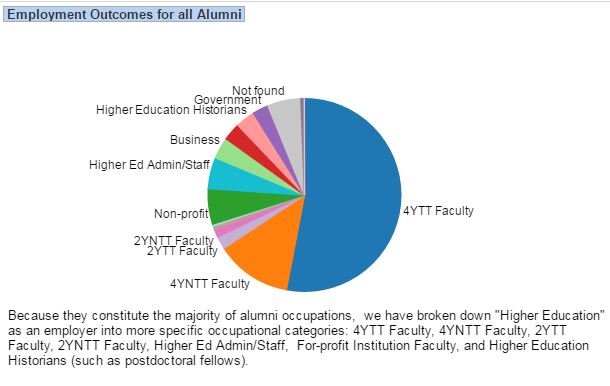
 Last semester, I taught my first section of Digital History, following my participation in the
 I recently had to cancel a trip to a conference. My panel is continuing without me; the chair has graciously offered to read my paper in my place. Partly because of this, I am doing something I haven’t done before: putting together a companion webpage for the presentation.
 As a newly-minted ABD embarking on my first stab at teaching the early American history survey, I find myself buried beneath my own excitement for the material. No one warned me that the biggest obstacle to designing a course would be curbing my own unrelenting enthusiasm. Perhaps no part of that enthusiasm has proven more damaging to my syllabus than my passion for storytelling. Specifically, I approached teaching the early America survey with a litany of historical works of fiction and non-fiction that I wanted to familiarize undergraduates with: 12 Years a Slave, Benito Cereno, Poor Richard’s Almanac, Letters From an American Farmer, among many, many other titles. Before too long I was looking at a weekly reading word count over 150 pages. Yikes.
 The Junto