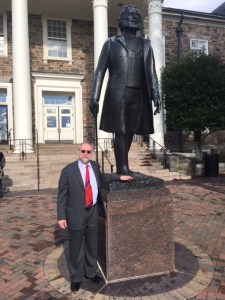
Photo is courtesy of Keydron K. Guinn, Associate Dean of the College of Liberal Arts, Morgan State University
Paul Finkelman is currently the John E. Murray Visiting Professor of Law at the University of Pittsburgh School of Law, where he teaches Constitutional Law and a seminar on the law of slavery. He received his PhD in U.S. history from the University of Chicago and his BA in American Studies from Syracuse University. He specializes in American legal history, slavery and the Founders, American slave law, modern human trafficking, the Civil War era, U.S. Constitutional history and law, the legal history of race relations, the history of Civil Liberties, the history of the electoral college, Constitution and firearms regulation, and Baseball and Law. He is the author of more than 200 scholarly articles and more than forty books. His next book, Supreme Injustice: Slavery and America’s Highest Court, will be published by Harvard University Press in 2017. His work on legal history and constitutional law has been cited four times by the United States Supreme Court, numerous other courts, and in many appellate briefs. He was an expert witness in the famous Alabama Ten Commandments Monument Case and in the law suit over the ownership of Barry Bonds’ 73rd home run ball. He has also recently worked with HeinOnline to create a free database called Slavery In America and the World: History, Culture, and Law, which he discusses below. This interview was conducted by Candace Jackson Gray at Morgan State University in Baltimore, MD on November 30 and December 1, 2016. Continue reading


 We’re pleased to feature this interview with Dr. Ian McKay, the director of the
  It’s a fun time for me to be a Juntoist. I joined the blog while I was ABD, on the brink of defending my dissertation. I had thoughts about research and writing, many untested theories about teaching, and
 The NEH Doing Digital History Institute took place at the George Mason University School of Law, over two weeks in July. The primary instructors, Sharon Leon and Sheila Brennan conceptualized the Institute as a means to aide mid-career scholars to learn digital tools both to serve as “ambassadors” for DH, and also because digital tools can allow historians to ask new research questions of sources. [1] This Institute in part, answers calls made by William Cronon, Cameron Blevins, and others.[2] Even as the interest in Digital History grows, there still remains the challenge of accessing digital history training for those outside of elite research universities. There is also a need to expand the number of historians who are qualified to peer review digital projects and to assess them in tenure portfolios. [3]
  On December 8, 1747, Gov. George Clinton (1686–1761) told a British statesman that the Assembly of New York “treated the person of the Governor with such contempt of his authority & such disrespect to the noble family where he had his birth that must be of most pernicious example.” He thought he might have to “give it [i.e., his position] up to a Faction.” The extant copy of this letter, held within Clinton’s
  A Workshop in Canadian International History
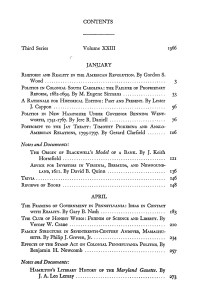 1966 was a transformative year in popular music. The Beatles released Revolver; Dylan put out Blonde on Blonde; and the Beach Boys dropped Pet Sounds. Even fifty years later, those three albums sit atop many respectable lists of the best all time albums. 1966 was also a transformative year in early American history. Fifty years later, it gets my vote for one of the top 5 most historiographically innovative years the field ever had.
  The Junto