Guest Post: Charleston and the Emergence of Middle-Class Culture in the Revolutionary Era

Jennifer Goloboy is a literary agent at Red Sofa Literary in St. Paul, MN. She has a PhD in the history of American civilization from Harvard University, and has published articles on merchants and the early American middle class. Her book, Charleston and the Emergence of Middle-Class Culture in the Revolutionary Era, will be published by University of Georgia Press on October 10.

unnamedAs the new history of capitalism reminds us of the immense wealth that traveled through antebellum cotton ports, an old analytical problem remains—why didn’t Southern merchants invest in their communities, in the manner of the Boston Associates? Historians have traditionally explained that this lack of investment was caused by Southern culture: the Southern commitment to slavery, shared by its mercantile class, mandated a conservative approach to economic investment and a fear of change. For example, Scott P. Marler’s recent book on merchants in New Orleans claimed that “in the context of the slave society in which they were deeply implicated, their peculiar market culture discouraged the investments necessary for the city to modernize its economic base,” such as manufacturing and railroad-building.[1]
Continue reading

Dissertating with Scrivener

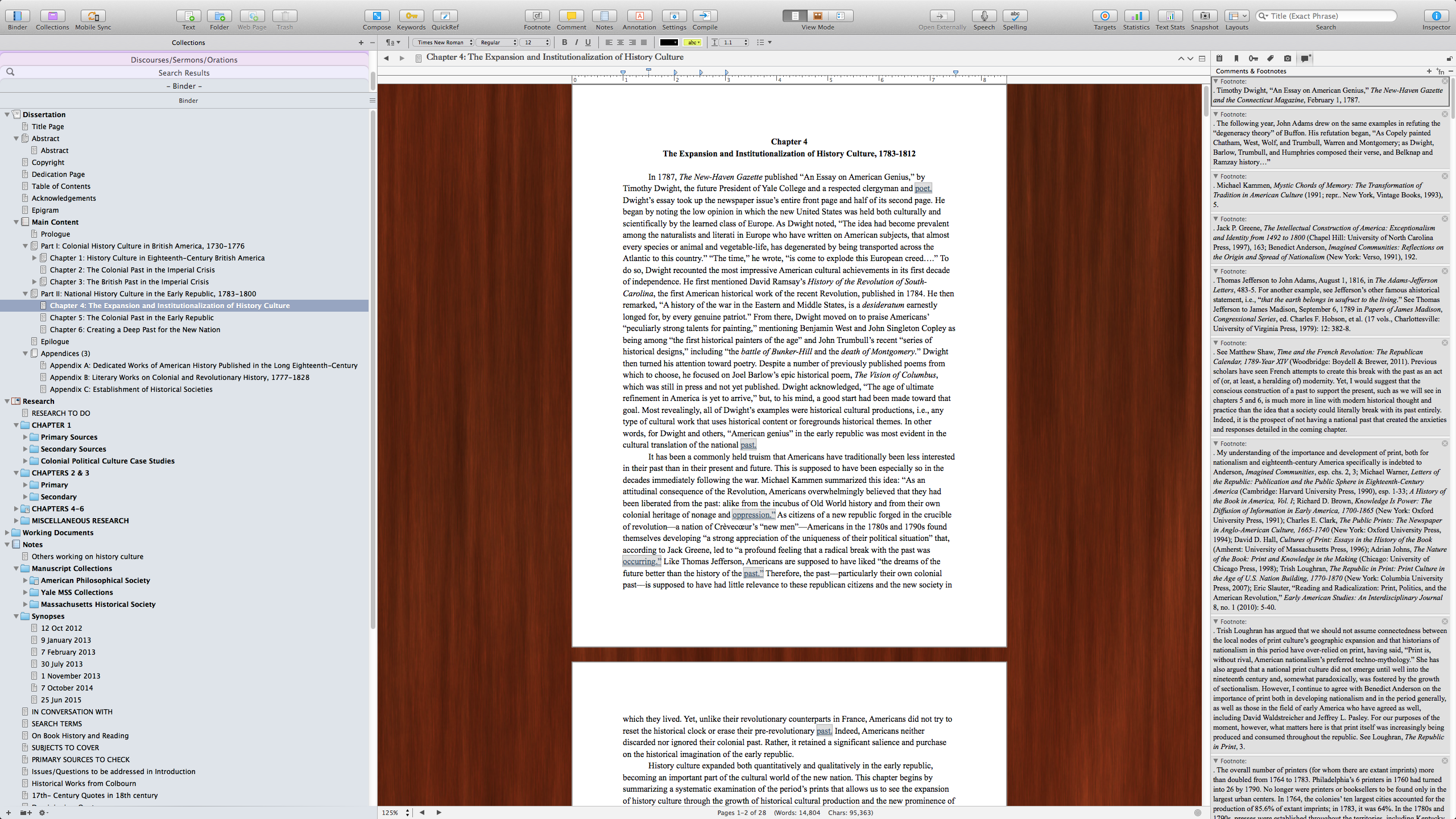
Screen Shot 2016-09-04 at 6.09.19 PMA few years ago as a pre-ABD graduate student, I wrote a post for the blog that has proved to have a longer shelf-life than most. That post, “Digital Workflow for Historians,” laid out how I used two programs, Papers and Scrivener, to manage my research and writing process. At the end of that post, I offered to share my project template and Chicago-style Compile (or export) preset. Over three years later, I still get emails on a monthly basis asking for those files. Following a discussion on Twitter last week about using Scrivener, it seemed the time was right to revisit the topic and to show how I ended up using Scrivener throughout the dissertation process, from organizing my research to producing drafts and revisions of chapters. Continue reading

Guest Post: How Do We Find Religion in the American Revolution?

Kate Carté Engel is an associate professor of history at Southern Methodist University.  She is the author of Religion and Profit: Moravians in Early America (Philadelphia: University of Pennsylvania Press, 2009), and she is currently writing a history of international protestantism and the American Revolution.

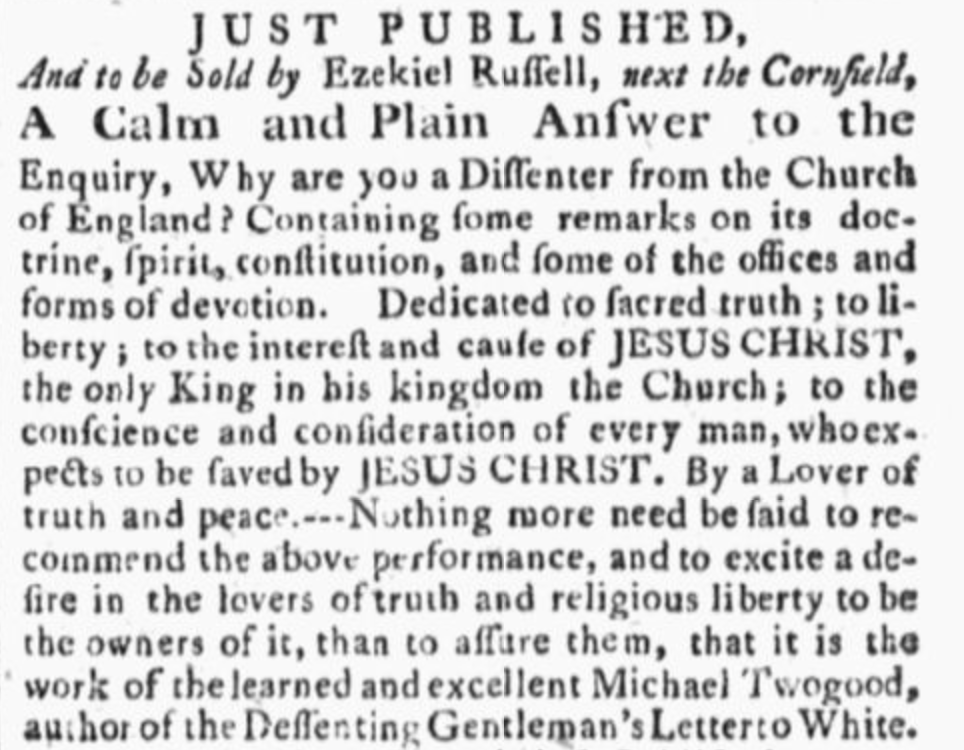
Screenshot 2016-05-17 12.13.52.pngOn May 17, 1773, an advertisement appeared in the Massachusetts Gazette for a new book by English dissenting minister Micaiah Towgood (misidentified in the advertisement as Michael Twogood). The ad is interesting because it is one of only 67 items in that come up in a search of Readex’s American Historical Newspapers database for the period between 1764 and 1789 containing a particular trifecta of terms: “Jesus Christ,” “liberty”, and (to get both religion and cognates like religious and religiously) “religio*”.

Continue reading

Guest Post: Research in Jamaica

Rounding off this week’s roundtable on travel to the archives, we are pleased to present a guest post by Dr. Aaron Graham, a Stipendiary Lecturer in History at New College, Oxford, and author of Corruption, Party, and Government in Great Britain, 1702-1713 (Oxford University Press, 2015). Aaron is currently working on corruption, finance and empire in North America and the West Indies during the long eighteenth century.

Archives in Jamaica and the West Indies tend to be overlooked. “There are duplicates of the whole lot in the [Public] Record Office in London,” one colonial official noted in 1928, “[and] researchers will work in London rather than here.”[1] My recent visit to the Jamaica Archives and National Library of Jamaica suggests this is not entirely true. The papers that were sent back to Britain tended only to be those of interest to the imperial government, and although large amounts of material have been lost or destroyed by the climate, what remains in Jamaica can shed important light on society in the West Indies from the colonial, rather than imperial perspective. Although there are frustrating gaps in all of these series, by the standards of other archives in the West Indies they are uniquely rich, and the surface has still only been scratched. Continue reading

Teaching with Databases: An Early American Atlanticist’s Conundrum

SourcesDuring my three years of teaching in England, it’s become apparent that students in my American history classes spend a lot of time worrying about access to primary sources. As an undergraduate myself, I knew that upper-level assessment turns on the ability to find and analyze primary sources—that stipulation is no different in this country. What’s clear, however, is that whereas as an undergraduate I could go to the stacks and wander around until I had a pile of travel narratives, diaries, and monograph reproductions related to early American Atlantic history, that’s not necessarily the case here for students taking classes on early American history, Native American history, the Atlantic world, slavery, trade, and colonization. The costs of a Readex subscription, just for example, are too expensive for the library to justify when most students aren’t going to research early American newspapers. As a result, I’ve had to think hard about how to ease students’ worries about locating sources. Continue reading

Evolution of an Article

TypingIn summer 2010 I sat in the house furnished by Rhys Isaac in Colonial Williamsburg, and attempted to write my first dissertation chapter. I’d just finished my first research trip, to Library and Archives Canada, in Ottawa, and was in the middle of my second, at the John D. Rockefeller Library. I was trying to follow advice I’d read to write as I researched. There was no Wi-Fi in the house, which was a curse and a blessing. I couldn’t get distracted, but I also did not have instantaneous access to articles and books, which meant I couldn’t check basic facts and chronologies, which, turns out, tend to be missing from your research! Continue reading

“UNITE OR DIE”: John Holt’s New-York Journal; or, the General Advertiser and the Imagery of Allegiance

Colonial Williamsburg - reconstruction of Holt's storehouse, sometimes referred to as John Holt's "new store" on lots numbers 49 and 50 that he built in about 1745 .

Colonial Williamsburg—reconstruction of Holt’s storehouse, sometimes referred to as John Holt’s “new store.”

A short while ago, I wrote on the importance of political caricatures within eighteenth-century British America. I called for an increased focus on how caricatures affected, and in some cases represented, politics during the American Revolution. In today’s post, I’d like to do something similarI’d like to call for an increased focus on newspaper mastheads. An increased exploration on what they meant, and how they were used for political mobilization. Continue reading

Guest Post: The Winthrops and their Books: A Transatlantic Tale

Guest posters Richard Calis and Madeline McMahon are graduate students in the History Department at Princeton University. Along with Frederic Clark, Anthony Grafton, and Jennifer Rampling, they are part of a collaborative research project (@WinthropProject) studying how multiple generations of Winthrops read, annotated, and acquired books on both sides of the Atlantic. 

John Winthrop (1588-1649) and his son John Winthrop Jr. (1606-1676) are now known primarily as protagonists in the turbulent political history of early America. But in addition to shaping the government and theology of New England as governors of Massachusetts Bay and Connecticut (respectively), they and the rest of the Winthrop family also participated in a transatlantic and inter-generational bookish culture. Long before the Arbella sailed to Boston in 1630 to build a “city upon a hill”, generations of Winthrops began to talk about books, ways to read them and, as we will illustrate here, the difficulties and contingencies of collecting them—on both sides of the Atlantic. Continue reading
The Day the Presses Went Silent

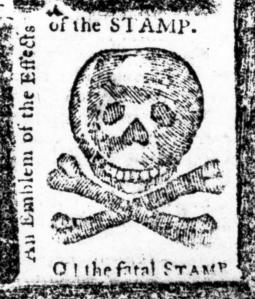
nypl.digitalcollections.95aa698d-b65d-5d52-e040-e00a18064066.002.w250 years ago today, the Stamp Act was in legal effect throughout the British North American colonies—including not only the “Thirteen Colonies” but also British possessions in Canada and the West Indies. As those who study the American Revolution know, the matter was rather different when it came to the on-the-ground impact.

Continue reading

A Toast to John Adams

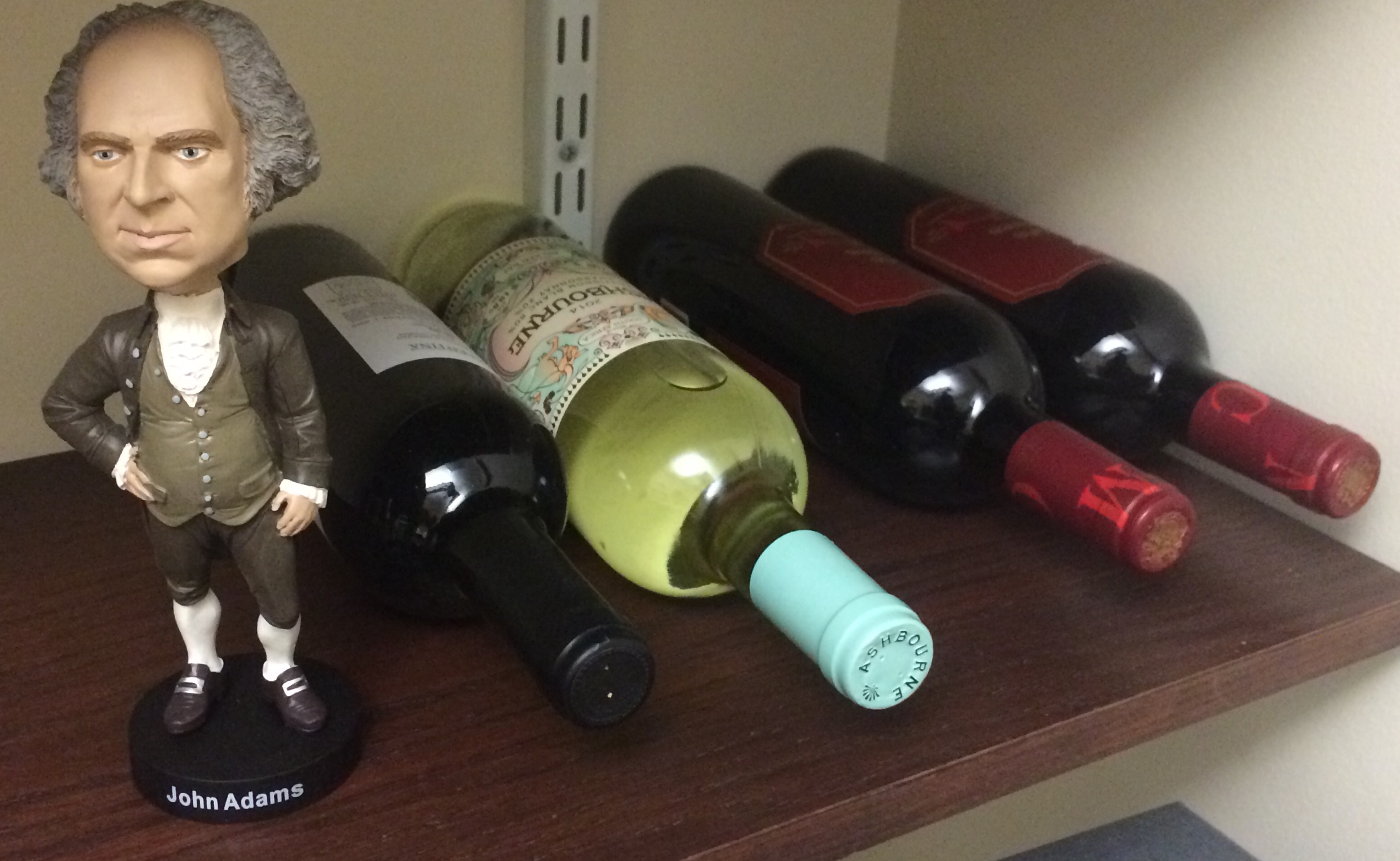
ja wineHappy 280th birthday to President John Adams: lawyer, statesman, and…wine connoisseur? He began a crisp New England morning like today with a tankard of hard cider, but Adams’ years in Europe primed his palate for fine French wine. Continue reading