The Week in Early American History: Super Bowl Edition

tweahAs Americans gather round the tv, settle into their couches, and devour unhealthy amounts of wings while encouraging concussion culture watching football, the world of early American history news moves on. Let’s hit the links!

Speaking of contact sports, Obama delivered his State of the Union Address, which prompted lots of discussion on executive orders. Jon Meacham oddly argued that previous presidents like Lincoln and FDR didn’t execute similar actions, but then later offerd an apology for the mistake—which, ironically, actually is something FDR never did. Continue reading

Guest Post: “Libraries in the Atlantic World” Conference Recap

Today’s guest poster, Aaron M. Brunmeier, recaps the recent conference in Liverpool, England. He is a Ph.D. student at Loyola University-Chicago, where he studies print culture, gender, and the public sphere in revolutionary New York City. He is the social media assistant for the Community Libraries Network.

g3library

Last week, I finished my minor field exams, lesson-planned for my substitute teacher, and then hopped on a plane headed toward Liverpool for a conference on library history. It was the first of three colloquia organized by the Community Libraries Network and funded by the AHRC. This colloquium, “Libraries in the Atlantic World,” brought scholars of different disciplines from all around the world to share their research and discuss the newest trends in the field at the University of Liverpool, 24-25 Jan. 2014.

Continue reading

The Kitten in the Bookcase

ruebooks

Our new kitten, Rue, sitting on top of a shelf in the “Slavery and Freedom” section of my library. This post was totally not just an excuse to use this photo.[1]

A few months ago my partner and I moved to a new apartment, for the first time since I began living in New York full-time. The best part of moving to me, for purely selfish reasons, was it created an opportunity to fully reorganize my library for the first time in three years. Our old apartment was much smaller than our current place which left my ever-growing doctoral candidate’s library relegated to one and a half bookshelves. This led to all kinds of organizational chaos and housecleaning headaches – with books tucked away in closets, stacked on desks, piled in corners.  Many times while writing I found myself looking for a book for a reference or citation say, for example, my copy of Joanne Freeman’s Affairs of Honor (which always seems to vanish) and I knew, for the life of me, that I had the book somewhere in the apartment, but had no way to even begin to find it without tearing the place apart. At the new apartment I have, thanks to my partner’s beneficence, the space to fully store my library in real bookcases and in some sort of proper organizational scheme.

Continue reading

Guest Post: Sir James Wright and Jenny, his free “black servant”

Today’s guest poster is Greg Brooking (PhD, Georgia State University). His dissertation on Sir James Wright, royal governor of Georgia, is entitled, “‘My zeal for the real happiness of both Great Britain and the colonies’: The Conflicting Imperial Career of Sir James Wright.” He is the recipient of two fellowships from the David Library of the American Revolution and authored a chapter in General Nathanael Greene and the American Revolution in the South (University of South Carolina Press, 2012). He currently teaches at Kennesaw State University and Southern New Hampshire University. This is his first guest post for The Junto

I’ve just begun the arduous task of transforming my recently completed dissertation about colonial and revolutionary Georgia into a work worthy of an academic press. Part of this process, for me at least, has been to re-examine my notecards (actually an enormous Excel spreadsheet), seeking new gems, ideas, and angles. In so doing, I’ve rediscovered a tidbit that I want to further develop during the manuscript process and I humbly submit this post as a solicitation to the blog’s readers, seeking their varied and expert insights. Specifically, this tidbit relates to a caveat in the final will and testament of Sir James Wright (1716-1785), which calls for an annuity for his free “black servant,” Jenny. Continue reading

The JuntoCast, Episode 8: Thomas Paine and “Common Sense”

The JuntoCastIn this month’s episode, Ken Owen, Michael Hattem, Roy Rogers, and Ben Park discuss Thomas Paine, including reconsidering the importance of his most famous work, “Common Sense,” his life as an eighteenth-century transatlantic radical, and his legacy today compared to that of the other “founders.”

You can click here to listen to the mp3 in a new window or right-click to download and save for later. You can also subscribe to the podcast in iTunes. We would greatly appreciate it if our listeners could take a moment to rate or, better yet, review the podcast in iTunes. As always, any and all feedback from our listeners is greatly welcomed and appreciated.

Continue reading

Using Local History in the Survey: City Streets

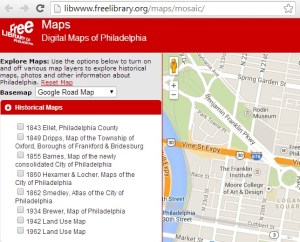
digitalmapsofphillyrecent conversation with Joe, Ken, and Michelle Moravec has me thinking about ways to use local history in a US survey course. Right now, Michelle and I have it easy; we’re both teaching in greater Philadelphia. It doesn’t take a lot of creativity to find ways to call out local attractions in class. (I can even display a map showing my campus smack in the middle of the Battle of Germantown.) But what about local history in general? How can we demonstrate that history is experienced in particular places, and that every place, at least potentially, has a history?

Continue reading

Using Contraries in the Classroom: Thoughts on Choosing Reading Assignments

“Without Contraries there is no progression. Attraction and Repulsion,
Reason and Energy, Love and Hate are necessary to Human existence.
From these contraries spring what the religious call Good & Evil.
Good is the passive that obeys Reason. Evil is the active springing
from Energy. Good is Heaven. Evil is Hell.”
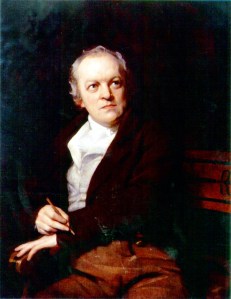
-William Blake, The Marriage of Heaven and Hell

I doubt that the mercurial poet William Blake had American historiography on his mind when he penned these famous lines from his most famous poem, but I am going to use them for such a purpose anyhow. And who knows—Blake was indeed known as a visionary. Continue reading