Today’s guest post comes from Steven J. Peach, who will graduate in May 2016 with a Ph.D. in U.S. history from the University of North Carolina at Greensboro. (Congrats, Steven!) His research examines Creek Indian politics, diplomacy, and power in early America. This is his first guest post for The Junto.
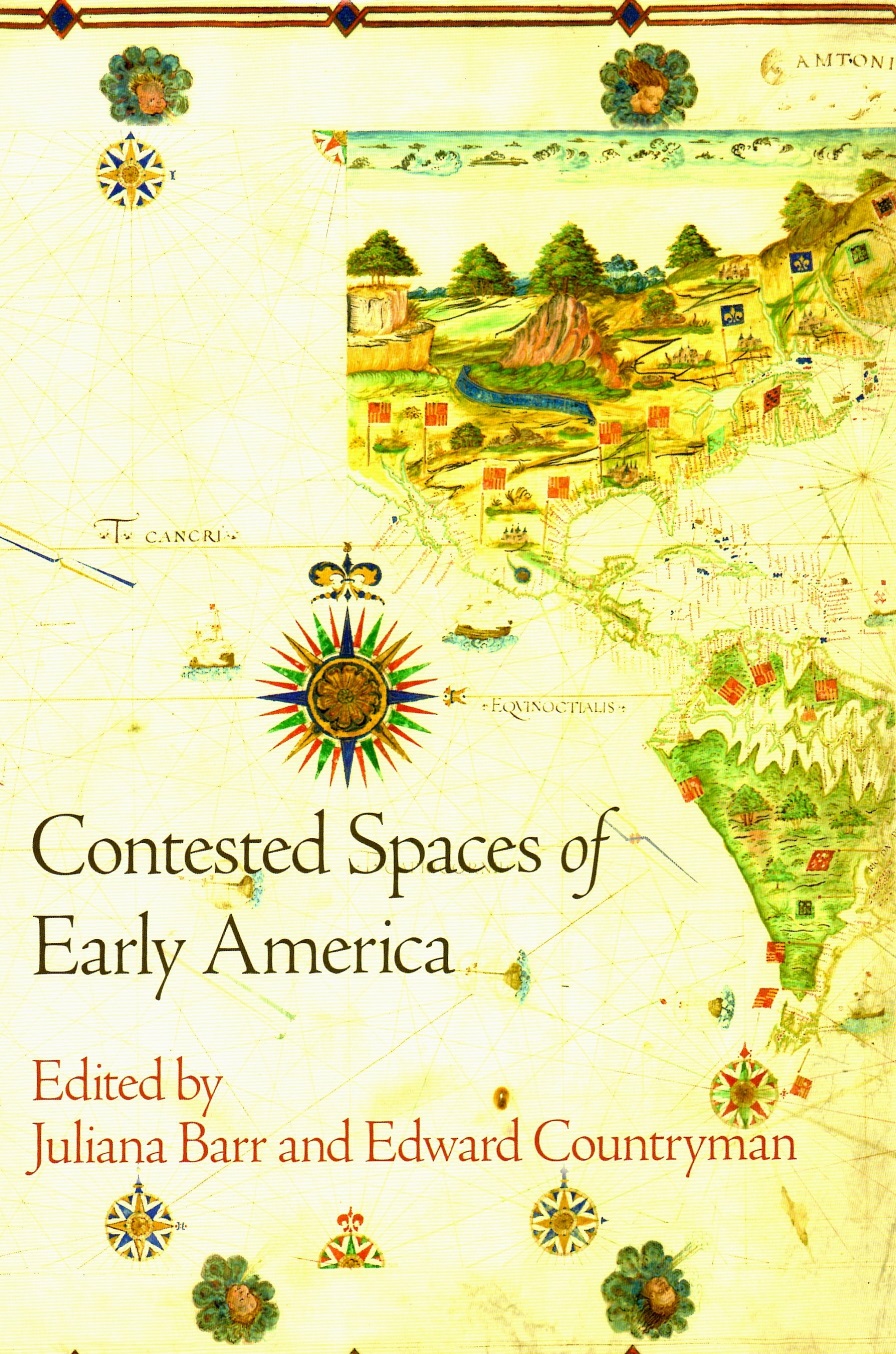 In 2015, Gordon Wood charged the William and Mary Quarterly with no longer publishing scholarship fixed “exclusively” on the “origins” of the United States. Restricting early America’s geography to the modern limits of the U.S., he argued that articles like that on sixteenth-century Castile make the “boundaries” of early America “mushy.” Not so fast, responded Joshua Piker, the Quarterly’s editor. A few months ago, he refuted Wood by saying that the Quarterly never focused solely on U.S. origins. (Piker’s refutation is dazzling; if you have not read it, you should!) Piker went on to say that early Americanists must abandon any “misleading coherence or … artificial simplicity” to define the field. Instead, they ought to “get lost” in the “vastness” of early America—or Karin Wulf’s #VastEarlyAmerica.[1] What spaces did early America encompass, then, and how can the field begin to sketch them? Native American history offers a path forward. Continue reading
 After nearly three-and-a-half years, we are preparing to move on to the next level.
 As both a horror nerd and an Early American historian, I have been excited about writer/direct Robert Eggers’ debut feature The Witch for quite some time. Excited might be a bit of an understatement: the first time I saw a poster in a theatre I shrieked, and I have been faithfully following the strangely endearing and decidedly bizarre Twitter of the film’s sometimes-antagonist goat,
  One of the trending themes in Native American history is “Settler Colonialism.” From Patrick Wolfe’s foundational essay, to recent works by historians and literary scholars—Bethel Saler, Jodi Byrd, Gregory Smithers, David Preston, and Lisa Ford, for instance—this theoretical model has attracted significant attention within the field.

 John Winthrop (1588-1649) and his son John Winthrop Jr. (1606-1676) are now known primarily as protagonists in the turbulent political history of early America. But in addition to shaping the government and theology of New England as governors of Massachusetts Bay and Connecticut (respectively), they and the rest of the Winthrop family also participated in a transatlantic and inter-generational bookish culture. Long before the Arbella sailed to Boston in 1630 to build a “city upon a hill”, generations of Winthrops began to talk about books, ways to read them and, as we will illustrate here, the difficulties and contingencies of collecting them—on both sides of the Atlantic.
  The Junto