#WhatComesNext? Book Ideas for the Hamilton Lover in Your Life

#WhatComesNext? Book Ideas for the Hamilton Lover in Your Life

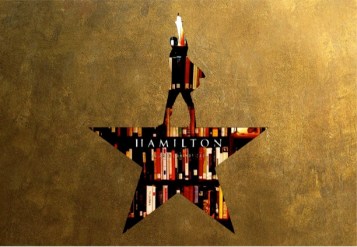
HamiltonBooksWith Hamilton’s sweep at the Tonys last night, this year’s phenomenal tide of Hamilton-mania has hit the high-water mark. You’ve cheered each much-deserved award and accolade, you’ve memorized every word of the soundtrack, you’ve devoured the #Hamiltome. Perhaps you’ve kept up with professional historianswide range of responses to Lin-Manuel Miranda’s blockbuster. Maybe you’re even one of the lucky few who’ve managed to score tickets to the show itself. But now, fans of the musical (and folks who are simply surrounded by them) might well find themselves asking, #WhatComesNext?

The Junto has the answer! Tomorrow afternoon, when you lose the daily ticket lottery yet again, why not start lookin’ for a mind at work? Grab a great history book and drown your sorrows in a flagon of sweet American Revolution knowledge. Here are some picks, creatively paired with favorite characters from the musical. Continue reading
What Do Early Americanists Offer the Liberal Arts?—Part II

What Do Early Americanists Offer the Liberal Arts?—Part II

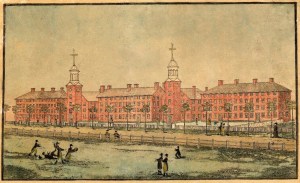
Yale College, 1807Last week, in the first part of this post, I argued that we tend to justify the liberal arts in two potentially contradictory ways. First, we assert that the liberal arts offer tools for citizenship. Second, we claim they point our way to human values that transcend any community. I argued that both of these justifications or approaches are necessary. I also suggested that early Americanists have not found it easy to explain what we contribute to the second approach.

Today, therefore, I am taking up the question I posed last week. Does early American scholarship offer anything distinctive to the liberal arts as a way of understanding humanity at large? Continue reading

Q&A with Alejandra Dubcovsky

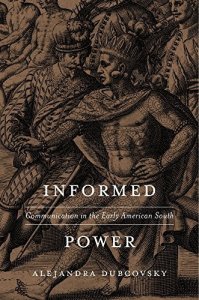
DubcovskyToday at The Junto, we’re featuring an interview with Alejandra Dubcovsky about her new book, Informed Power: Communication in the Early American South, which Jessica Parr reviewed yesterday. Alejandra Dubcovsky is an Assistant Professor of History at Yale (and soon an Assistant Professor of history at UC Riverside). She earned her BA and PhD from UC Berkeley. She also has a Masters in Library and Information Sciences from San Jose State. She was born and raised in Buenos Aires, Argentina. Her work has appeared in Ethnohistory, The William and Mary Quarterly, and Native South. Continue reading

Review: Alejandra Dubcovsky, Informed Power: Communication in the Early American South

Alejandra Dubcovsky, Informed Power: Communication in the Early American South (Cambridge: Harvard University Press, 2016).

61VAwsW64fL._SL500_Alejandra Dubcovsky’s Informed Power: Communication in the Early American South is an ambitious book. She analyzes how information was communicated throughout the early South, a region that was without a regular mail system or print culture prior to 1730. The “early South,” as Dubcovsky acknowledges, is an “ambiguous” term (3). Her “early South” includes much of the lands from the Jamestown settlement south, and from the Mississippi River east. The result is a vibrant blend of Native American peoples, Africans, and European interactions that both complicate and enrich her analysis. Her sources include not only English, French, and Spanish, but also a number of Native American sources, including Timucua. She draws not only on written sources, but linguistic and archaeological evidence as well. This interdisciplinary approach allowed for broader inclusion of non-European networks than appears in many studies. Networks, as Dubcovsky defines them, are a “pattern of ties connecting discrete places or peoples”(4) She discusses a number of different types of networks—economic, political, religious, diplomatic, subaltern—but depicts all nodes as uniform in size. While some might take issue with this approach, the uniformness of the nodes makes sense, given the book’s goal of decentralizing European power structures, and does not detract. Continue reading

What Happened to the “Democratic” in the “Age of Democratic Revolutions”?

What Happened to the “Democratic” in the “Age of Democratic Revolutions”?

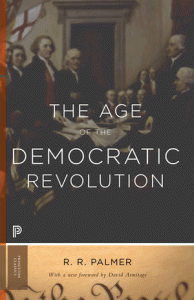
PalmerThis past semester I taught a course on “18th Century Atlantic Revolutions: America, France, and Haiti,” which included both undergraduate and graduate students. (I wrote about the assigned readings at my personal blog.) I’d like to highlight a central theme that I emphasized throughout the course as a way to discuss historiographical and pedagogical questions.
To give my grad students a sense of the field’s starting point, I had them read R. R. Palmer’s classic 2-volume The Age of Democratic Revolution: A Political History of Europe and America, 1760-1800 (1959, 1964; 2014), recently combined and re-published by Princeton University Press. Advancing through the semester and reading much more recent books, the dated nature of Palmer’s book is readily apparent. Most obvious is its avoidance of Haiti. (At an AHA panel on the Age of Revolutions last January, Nathaniel Perl-Rosenthal mention that it’s basically an academic ritual to mention this whenever discussing Age of Democratic Revolution.) Palmer also focuses on high-end (and male-centric) intellectual history, ignores economic interests and intersections, and only engages the nations whose revolutions “succeeded.” This last point is obviously problematic, of course, given what happens in France after their Revolution. But as Janet Polasky’s recent book shows, a more comprehensive view can be gleaned through looking at revolutionary moments that did not have successful outcomes. Like any book published over a half-century ago, even a classic book like Palmer’s, there are plenty of holes to acknowledge. Continue reading

What Do Early Americanists Offer the Liberal Arts?

What Do Early Americanists Offer the Liberal Arts?

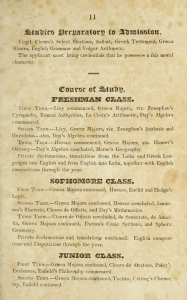
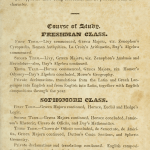
Course of Study, Amherst College, 1824

Perhaps because the traditional academic year has ended, and probably in part because of the tides and undertows of the current election, we seem to be awash just now in excellent essays about the purposes and state of the humanities.

To do my part to put a stop to that, I am here to ask what the liberal arts have to do with early American studies.

I suspect we tend to take the relationship too much for granted.

Continue reading

The Sacred and the Secular in Early National Virginia

Is revolutionary Virginia the birthplace of American secularism?

My attention was returned to this critical question by a recent twitter exchange between Annette Gordon-Reed and Sam Haselby (and others) along side a recent piece by Haselby in Aeon.[1] The scuffle between Gordon-Reed and Haselby focuses on the time-is-a-flat-circle question of Thomas Jefferson’s religious beliefs. Was he a secularist? Some variant of Christian? A Unitarian? An atheist? Haselby’s Aeon piece takes a different tack, arguing that the American founding represented a “rogue wave of rationality in a centuries-long sea of Protestant evangelising, sectarianism and God-talk.” Haselby marks out the Founders—particularly Jefferson and James Madison—as “visionary secularists” who created a secular republic, which was eventually co-opt by decidedly non-secular political and cultural forces. He singles out late eighteenth-century Virginia as the primary canvas upon which the great artists of American secularism worked.[2] Continue reading

Guest Post: How Do We Find Religion in the American Revolution?

Kate Carté Engel is an associate professor of history at Southern Methodist University.  She is the author of Religion and Profit: Moravians in Early America (Philadelphia: University of Pennsylvania Press, 2009), and she is currently writing a history of international protestantism and the American Revolution.

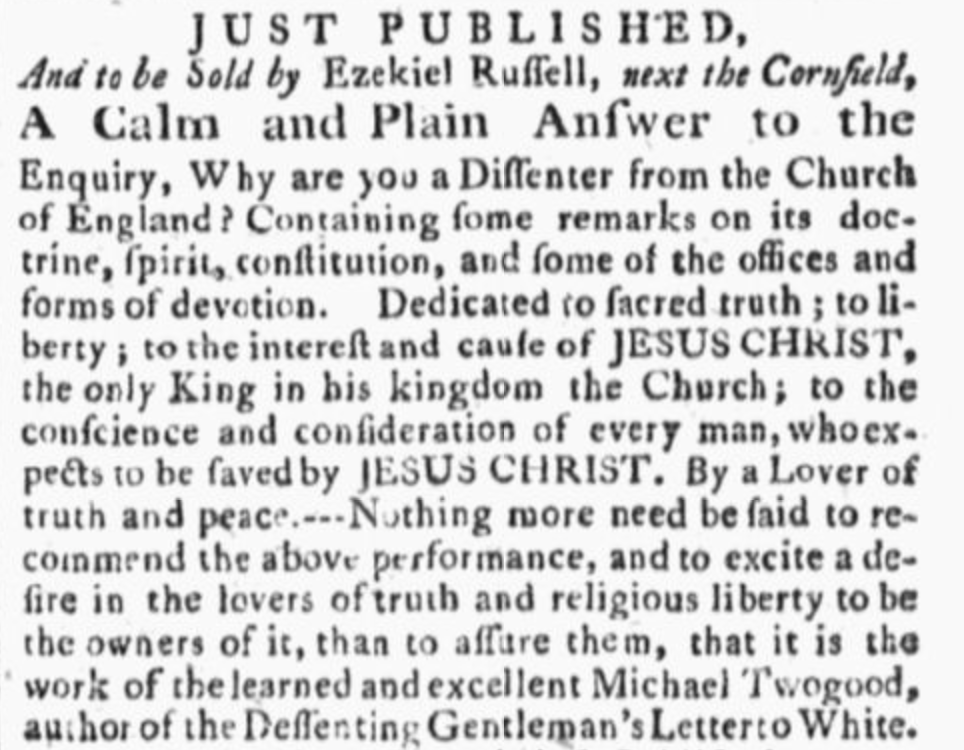
Screenshot 2016-05-17 12.13.52.pngOn May 17, 1773, an advertisement appeared in the Massachusetts Gazette for a new book by English dissenting minister Micaiah Towgood (misidentified in the advertisement as Michael Twogood). The ad is interesting because it is one of only 67 items in that come up in a search of Readex’s American Historical Newspapers database for the period between 1764 and 1789 containing a particular trifecta of terms: “Jesus Christ,” “liberty”, and (to get both religion and cognates like religious and religiously) “religio*”.

Continue reading

Q&A: Zachary Hutchins, editor of Community without Consent: New Perspectives on the Stamp Act

Q&A: Zachary Hutchins, editor of <em>Community without Consent: New Perspectives on the Stamp Act</em>

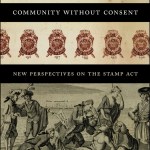
13274990_10103531179115568_1930581660_oOn Sunday, the United States Postal Service introduced a stamp commemorating the 250th anniversary of the repeal of the Stamp Act. Today we are pleased to present an interview with Zachary Hutchins, editor of a new collection of essays from Dartmouth College Press that challenges traditional understandings of the Stamp Act Crisis as (in the words of the USPS) “setting [the colonists] on a path toward revolution and independence.” Zach is an Assistant Professor of English at Colorado State University. In 2014 he published his first book, Inventing Eden: Primitivism, Millennialism, and the Making of New England. A 2016 Fellow of the National Endowment for the Humanities, Hutchins is currently completing his second monograph, Before Equiano: A Prehistory of the North American Slave Narrative. Continue reading
Guest Post: More Atlantic Archives

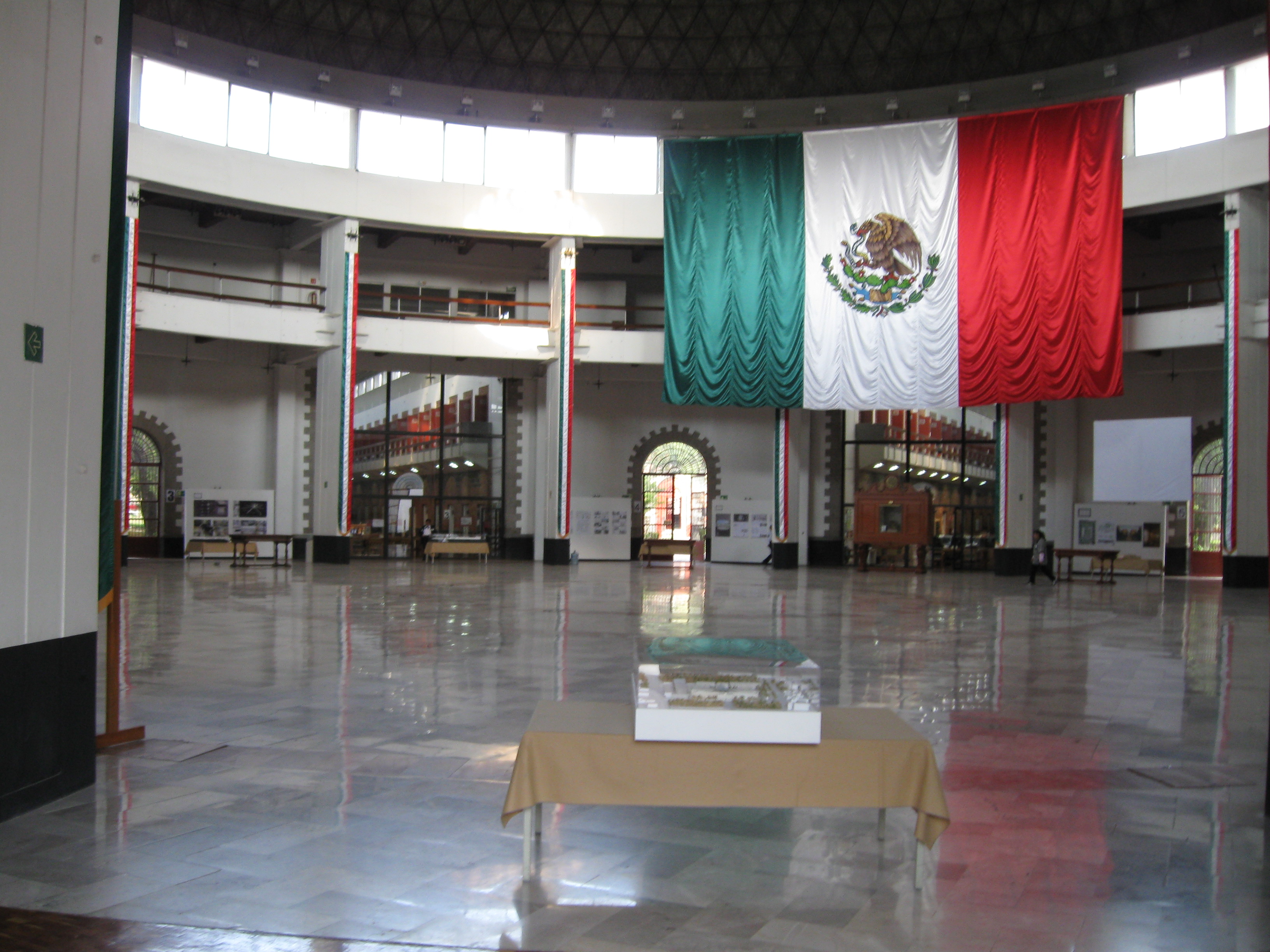
Today, The Junto concludes its series on “Archives around the Atlantic” with a guest post from Patrick Johnson about working in the General Archive of Mexico. Patrick Johnson is a PhD candidate in Anthropology at William and Mary, you can read about research and fieldwork from him and other anthropologists at their new blog.

IMG_0485Great posts at The Junto about archival work in Spain, France, England, Jamaica, and the United States got me thinking about my own archival work in 2010 in Mexico City. And, while the Archive of the Indies receives well-deserved attention from historians, Spanish archives in Mexico and collections in the US remain underutilized for understanding not only territories occupied by the Spanish but also colonialism in the present-day United States.  Continue reading