
“Valley of the Catawissa in Autumn,” Thomas Moran (ca. 1862)
Fall brings new early American titles to explore. Enjoy our Spring Reads 2015 list, too, and share your finds below!
“Valley of the Catawissa in Autumn,” Thomas Moran (ca. 1862)
Fall brings new early American titles to explore. Enjoy our Spring Reads 2015 list, too, and share your finds below!
Today, The Junto welcomes guest poster Charlotte Carrington-Farmer, Assistant Professor of History at Roger Williams University. Her current research focuses on framing dissent, deviance, and crime in early America in a wider Atlantic World context.
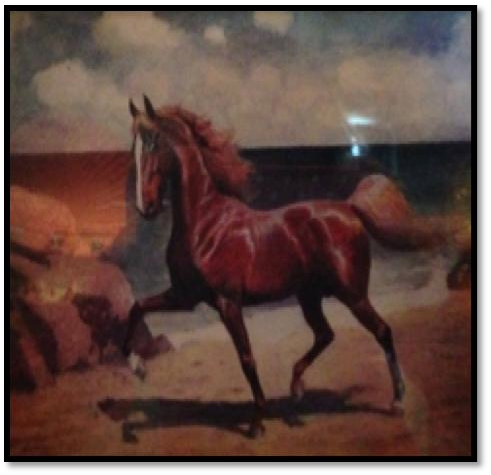
Image via Ann Holst and Pettaquamscutt Historical Society, Kingston, Rhode Island
Once considered a breed of “no beauty,” the Narragansett Pacer moved fast enough for an 18th-century rider to cover 50-60 miles a day of rocky New England ground. As a natural pacer, its backbone moved through the air in a straight line without inclining the rider from side to side. Bred in and named for a southern community of coastal Rhode Island, the story of Narragansett Pacer horse is tightly entwined with the history of the early slave trade. Throughout the 18th and 19th centuries, these horses were traded for rum, sugar and slaves. Often, the horses were raised by slaves on the plantations of Narragansett, then shipped around the Atlantic World to work on sugar plantations alongside other slaves. Continue reading
 Like many, Amos Doolittle struggled to turn in a decent first draft of American history. The 21 year-old engraver, later known as the “Paul Revere of Connecticut,” arrived in Lexington and Concord shortly after April 1775. Anxious to capture the battles’ action and aftermath, he chatted with local residents. He sketched terrain. For Doolittle, a trained silversmith, it was a chance to experiment with a craft he had yet to master. Part of what he produced, a set of four views storyboarding the “shot heard round the world,” hangs in the Boston Public Library’s new exhibit, “We Are One: Mapping America’s Road from Revolution to Independence.” By Doolittle’s lights, Massachusetts makes for a furious and frenzied tableau: gusts of redcoats’ gunpowder hazing the sky, and colonial ranks splintering on the advance. On the American side, it is hardly a picture of union. Patriots scatter, racing blindly to frame’s edge. In his rough draft of Revolution, Amos Doolittle demands that we unlock all hopes of what might come next. Continue reading
 Today I want to pretend that I know how to read science journals, particularly a recent Nature article by scientists Simon L. Lewis and Mark A. Maslin entitled “Defining the Anthropocene.”[1] Reading a summary about the article was provocation enough to read the article itself, which in turn sparked a more extended rumination about chronology, interdisciplinarity, and scholarly divides. Continue reading
Today’s guest post comes from Jordan Smith, a PhD Candidate in Atlantic History at Georgetown University. His dissertation, “The Invention of Rum,” investigates the development and production of rum in the seventeenth and eighteenth-century Atlantic World.
Warning: This post contains graphic accounts of industrial accidents.
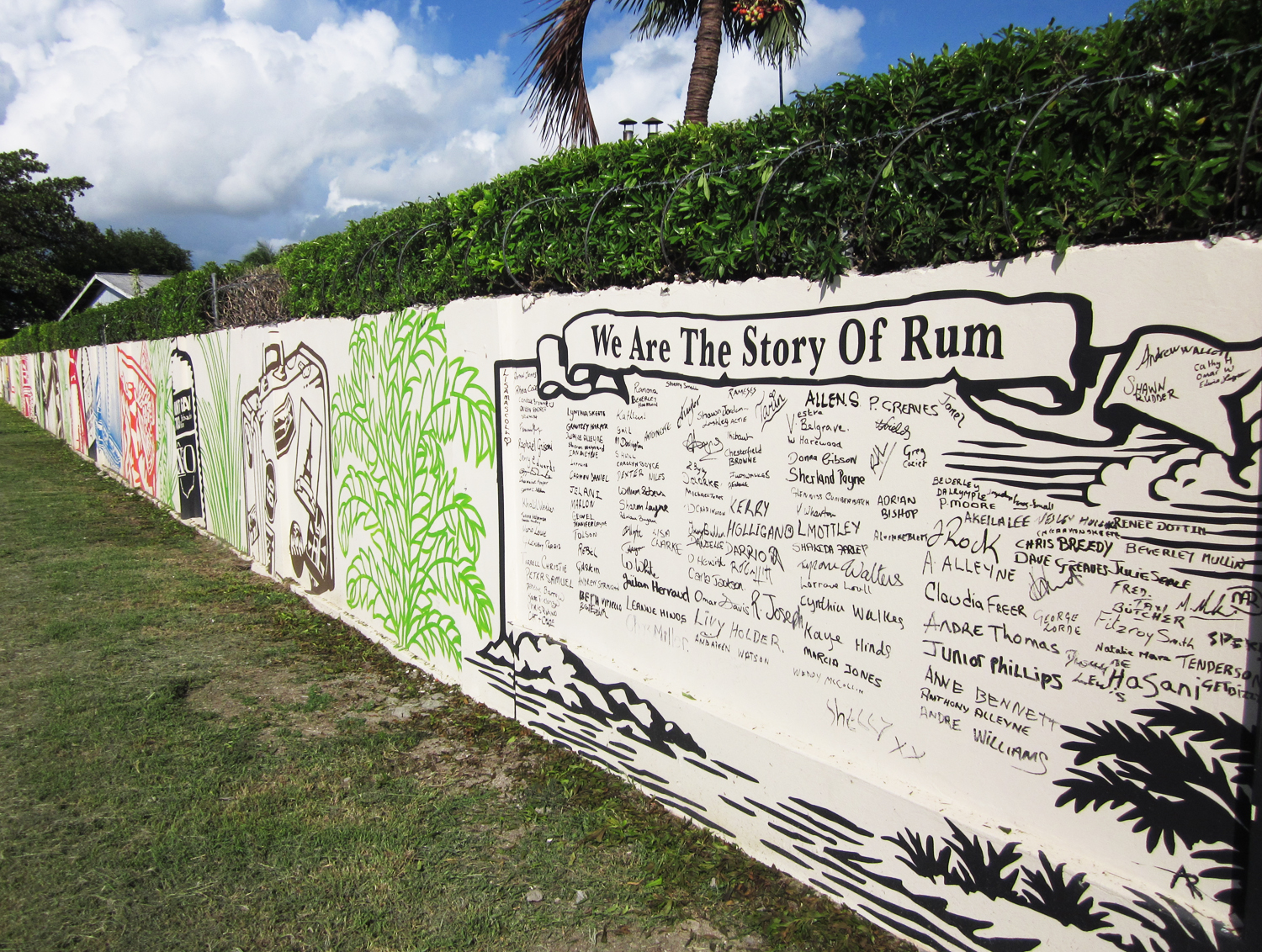 On a recent research trip to Barbados, I stopped by the Mount Gay Visitors Center. There, between tastes of a variety of rums, tour guides regaled me with a heroic tale of Barbados’s place in the invention of rum. Afterwards, I was handed a brochure which proclaimed Mount Gay to be “the rum that invented rum.” The reasoning for this marketing strategy is simple enough—Mount Gay is one of many distilleries that makes a financial killing off of linking their product to a happy history of ingenuity and originality. Yet accounts of eighteenth-century distillery disasters suggest that this invention and innovation of rum was often undergirded by shocking violence. Continue reading
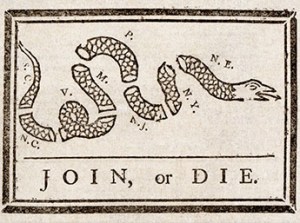 At the risk of overkill, I have thoughts about the “So Sudden an Alteration” conference hosted by the Massachusetts Historical Society, which I attended along with a number of my Junto colleagues. I’d like to pick up on the themes of the conference to discuss an underlying tension in the conversation that never quite reached the surface in explict terms.
 Here’s our seasonal roundup of new and forthcoming titles. Share your finds below! Continue reading
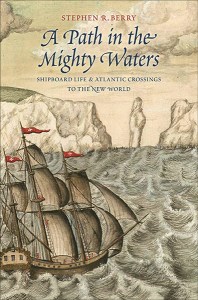 The following is an interview with Stephen R. Berry, an Associate Professor of History at Simmons College. My review of Berry’s recently-released book, A Path in the Mighty Waters: Shipboard Life and Atlantic Crossings to the New World (New Haven: Yale University Press, 2015) appeared on the blog yesterday. Today, he agreed to answer some follow-up questions about his book and his future research plans. Continue reading
When colonial Georgia was founded in 1732, it carved out a brand new space in the New World. The founders’ intentions were in part for it to serve as a charitable colony, where Britons from overcrowded debtor’s prisons could start anew. It also carved out an English space to serve as a geographic barrier between wealthy South Carolina and rival Spanish Florida. But, as Stephen R. Berry demonstrates in this highly original new study, colonies were not the only spaces that were created and negotiated as the Atlantic World expanded. The ocean, and indeed the ships that carried passengers to and from the New World should also be viewed as spaces in their own right.
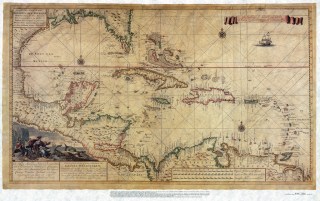
On a dark and stormy night in July of 1729, a vicious murder occurred in the port city of Veracruz. Okay, I don’t actually know if it was stormy on that night, nor was the murder particularly vicious but, for narrative effect, bear with me. On the evening in question, a Dominican priest accompanied by an entourage of the town’s residents walked to the trading factory of the British South Sea Company to pay the factors a visit. According to Inquisition records, as the group approached the factory, shots were fired from within the building, and the Dominican priest fell dead. The man who fired the fatal shots—William Booth[1]—claimed that he had not recognized the priest and fired in self-defense. As Booth argued, marauders frequently roamed the streets after dark and he assumed the visitors wanted to rob him. Booth was sentenced to five years hard labor in North Africa—a veritable death sentence—and the South Sea Company’s factory in Veracruz barely survived the incident, which reached the diplomatic tables of Europe.[2] Continue reading
 The Junto