
Walter Johnson’s River of Dark Dreams is a meditation on the making of the Cotton Kingdom in the nineteenth century American South. The book is rich with the intimacies and delicacies of detail—details that describe the fundamental material circumstances in which enslaved men, women, and children forcibly transformed Native America into cultivated grids of mono-crop culture at the behest of “Manifest Destiny”; details that are gut-wrenching in their vivid depictions of the social relations of white supremacy—the torture, the hunger, the bleeding, and the raping of the enslaved—the malignant, violent underbelly that made and forcibly maintained the Cotton Kingdom; details that connect the smallest common denominators of plantation life, whether measured in lashes (upon flesh), or pounds (of cotton), or any other metric of rule—to the global economy, which itself connected slaveholders and merchant capitalists from the fields and riverbanks of New Orleans to the factories of Manchester and Liverpool. Continue reading
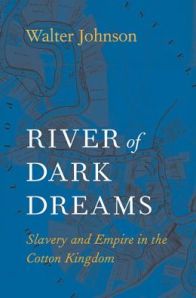 This week at The Junto, we are pleased to offer a roundtable review on Walter Johnson’s recent
  Few documents in the history of American religious freedom are as famous as Virginia’s “[A]ct for establishing religious freedom” – also known as Virginia’s Statute for Religious Freedom or (more colloquially) as Jefferson’s Statute. A quick glance at Jefferson’s text (carefully edited by the Virginia General Assembly) shows us why. Few other documents are such a clear and powerful exposition on the need for freedom of conscience.[1] The text has also aged well and appeals both sides of our modern church-state conflicts. On one hand the Statute suggests that religious freedom is a gift from god, for the “Almighty God hath created the mind free,” and on the other argues that religious beliefs are no different from “our opinions in physics or geometry.” In the Statute what the twenty-first century reader would think of as distinct “religious” and “secular” discourses are melded with spiritual coercion denounced as both “sinful and tyrannical.”[2] Who can disagree with that? It is no wonder why, then, that Jefferson had his role in drafting Virginia’s Statute for Religious Freedom engraved on his tombstone.
  On a cold and wet May Friday in London, I decided to take refuge from the weather by stepping back into the eighteenth century. While serving as agent for the colony of Pennsylvania (and others), Benjamin Franklin lodged in a small dwelling on Craven Street, now just behind Charing Cross station and a short walk from Parliament. Though Franklin’s lodgings were originally misidentified (to the extent that a commemorative plaque was placed on the wrong house!), the original building still stands. Now the only surviving Franklin home in the world, the house is the home of the “
 Looking forward to attending one of the largest conferences on the American Revolution in a generation this week in Philadelphia, I thought I would take a moment to reflect on the title of the conference—”
 In time for Memorial Day, we have several stories about time, memory, and narrative in general, as well as links to stories of early America.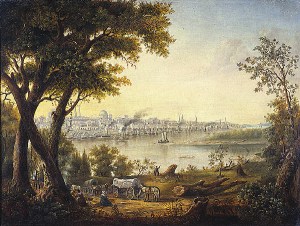
 The Junto