Janine Yorimoto Boldt is a PhD candidate in American Studies at the College of William & Mary. She is writing a dissertation that explores the social function of domestic portraiture in Virginia between Bacon’s Rebellion and the American Revolution.
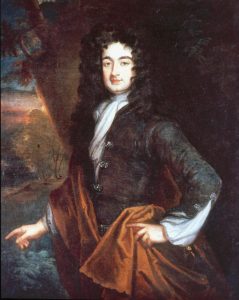 “Why should a historian read your dissertation? How can portraits tell us something new, rather than confirm what historians already know?”
The historian on my dissertation committee posed these questions during my prospectus colloquium. They haunt me when I sit in the archive and now it hangs over my head while I write. These questions only enhanced the feeling of the disciplinary divide between art history and history that I already observed. One of my comprehensive exam fields was early American cultural history. Reading early American history, I noticed how few historians engage art historical scholarship. Usually, the art histories are relegated to the footnotes as an obligatory afterthought. For example, after mentioning the fact that so-and-so had a portrait a footnote reads, “for more information on portraiture in the colonial period, see these [three sources here].”
To be fair, in the field of art history, there are few recent monographs that focus on early American art, and fewer that are object-centric. Wendy Bellion’s Citizen Spectator: Art, Illusion, and Visual Perception in Early National America (2011) and Jennifer Roberts’ Transporting Visions: The Movement of Images in Early America (2014) are recent and excellent studies of early art that place the object at the center of their analyses. Several cultural historians write about artists or write histories that revolve around art objects, but they tend to circle around the object instead of engaging in deep material and visual analysis. Biographical information about producers and consumers take center stage, rather than foreground the art as an agent. In the field of early American art, especially the colonial period (and on artists other than John Singleton Copley), there is a lot more work to be done.
When asked about current trends in historical scholarship, a recent visiting historian on campus told graduate students that we need to engage more with visuals. When they said this I was thrilled! I agree! Then, they said, “but not how to do visual analysis. That’s not important.” Why not? Why do so many historians dismiss the importance of the visual? Surely images can function as more than “wallpaper” and portraits can be used as more than illustrative of a historical figure’s likeness. At another event, after presenting an argument based on visual analysis of a woman’s portrait, a historian told me to “stick to evidence” from documents. However, this woman left virtually no archival evidence. All that she left to posterity was her portrait, and an unusual one at that. Do I not have an obligation as an historian to interpret this piece of historical evidence to the best of my ability in order to tell her story? Doesn’t the portrait count AS evidence in and of itself?
Certainly there are some disciplinary divisions in training and method. However, as the humanities become increasingly interdisciplinary, I hope that the divide between history and art history closes a bit and more historians choose to engage with art. We live in a hyper-visual world and historians can help students learn to think critically about historical images to prepare them for critically engaging with contemporary media. With that in mind, here are some suggestions for incorporating art into history classes and scholarship:
Discuss images in class. I have seen many historians use PowerPoints with images in lectures and presentation. Do more than use the images as simple illustrations. Pick a key image and dissect it as you would a primary source document. Ask questions like:
- Where was it displayed? What does that say about visibility the intended audience?
- How was it meant to be seen? Is it a small image meant to be held close? Was it part of a set of images? Was it a large statement piece?
- Who made it? Who commissioned it? Why?
- What can the image tell us about this event/person/culture that written documents cannot?
Think about assigning images as primary documents. In assignments that involve analyzing a primary source, consider using a image as an option. Or, consider pairing an image and a document.
Think critically about whether the image you include is appropriate. Are you using a images from the 1850s to illustrate an event in the 1770s? Include an image caption that references, at minimum, the date of creation and the artist. Dates matter!
Use images as evidence. Images are forms of material culture and are cultural texts. If your research brings you to images, try to do more than include them as “wallpaper” illustrations. Images are material, they are constitutive of culture, and visuality is formative.
As an American Studies graduate student, and an undergraduate with a double major in art history and history, I have taken a number of “traditional” history courses. Except for material culture seminars, I have not seen images used widely in the history classes. As an interdisciplinary scholar, I am interested in how other disciplines engage with art. Do you have any other suggestions for utilizing images? Do you regularly use images or assign art history texts?

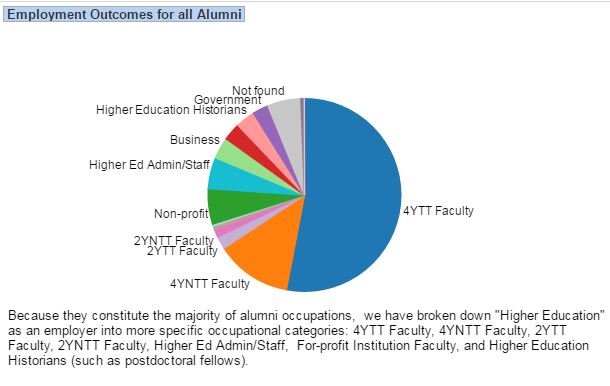
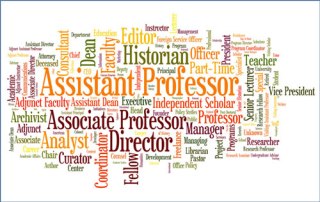 in early American history/literature/architectural history/art history/etc. or a related field, and have you chosen a career outside of the professoriate? The Junto wants to hear from you! There’s still time to participate in our conversation, “Where Historians Work: A View from Early America.”
 James Alexander (Alec) Dun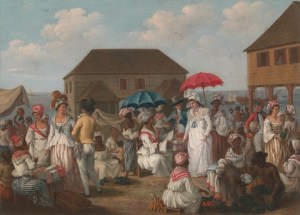
 Last semester, I taught my first section of Digital History, following my participation in the
  New England Beginnings is a partnership of New England historical organizations and museums, ancestry organizations, and participating scholars formed in 2015 to plan efforts to commemorate the cultures that shaped New England on the occasion of the four hundredth anniversaries of events such as the founding of Plymouth and the settlement of Massachusetts. The goals of the partnership are to 1) tell the stories of the region in the seventeenth century to a wide, general public audience and 2) to enhance accessibility of resources for future scholarship in the field. The
 In a series of classic science fiction stories, Isaac Asimov imagined a scientific discipline called “psychohistory”: a way to predict the future of an interstellar empire. Psychohistory could not foresee individual choices, but it could supposedly predict collective behavior over the course of millennia. At one point in the Foundation series, however, a charismatic figure named the Mule threatened to upend psychohistory’s predictions: he was a mutant, acting in ways the original model could not anticipate. In the universe Asimov imagined, the Mule alone seemed to possess true individual agency. Resisting a powerful model of human behavior, he offered instead a story about a person.
 The Junto