The meaning of the American Civil War has been, and still is, one of the most contentious issues facing the United States today. An aspect of the war that seems to be less spoken about though, was the role of Black women internationally during the Civil War. Wars of the scale of the American Civil War rarely lack an internationalist component. For the already internationalist American abolitionist movement, when the Civil War began in 1861, the abolitionist struggle shifted south with the work of women like Harriet Tubman and Charlotte Forten, but there were still important battles being waged internationally over the war and its meaning.
The Black woman who took the international abolitionist stage during the Civil War was Salem, Massachusetts’ Sarah Parker Remond. After having been in the British Isles for almost two years prior to the war, Remond’s abolitionist tour expressed a stronger sense of urgency, as the war provided a tangible arena for potential ending of slavery. While doing so, she developed notions of performative citizenship. Performative citizenship was an aspirational basis of struggle for realized citizenship based on Black abolitionist women’s proclamations of African-American identities. Those identities were based on economic and intellectual analyses of the central role their race’s plunder played in American economic growth. Continue reading
 As I type, President Donald Trump is tweeting: “
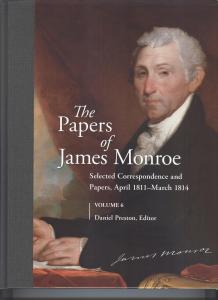 The latest volume of
 In researching and writing my book, Pulpit & Nation, I became keenly interested in the religious language employed by participants in the ratification debates of 1787-88. Not only did it illuminate the role of religion and clergymen in the politics of Revolutionary America, but it seemed particularly relevant to the almost canonical way in which so many twenty-first century politicians and pundits view the Constitution. Of course, when—or if—these individuals ever consult that document’s history, they rarely bother to question what political motivations drove so many of the seemingly religious expressions made by early national leaders. And there are many such statements. Yet, amid the numerous examples of Federalists and Anti-Federalists employing (and exploiting) providential language and Old Testament Biblicism in arguing for ratification, one example stands out as particularly complex in its motives and implications: the argument Benjamin Rush made for ratification in the Pennsylvania ratifying convention.
  On December 8, 1747, Gov. George Clinton (1686–1761) told a British statesman that the Assembly of New York “treated the person of the Governor with such contempt of his authority & such disrespect to the noble family where he had his birth that must be of most pernicious example.” He thought he might have to “give it [i.e., his position] up to a Faction.” The extant copy of this letter, held within Clinton’s
  Students of the early American republic: I urge you to apply to SHEAR 2016’s
 The Junto