Over the weekend, an international group of scholars met on the campus of Brown University to participate in a conference focused on various forms of enslaved migrations throughout the Americas from the seventeenth through the nineteenth centuries. Sponsored by the Omohundro Institute and the John Carter Brown Library, the meeting represented the fifth in a series of conferences about the transatlantic slave trade that have been organized by the OI.
For anyone who couldn’t make it to Providence[1], the panels were live-tweeted and can be found #TransAmCrossings. While the tweets of my colleagues give a great sense of the flow of the conversations over the weekend, what follows here are some of my reflections on the broader questions and themes that drove intellectual exchanges during and after the panels. Continue reading
 In August 2017, I virtually attended and
  With spring well underway, many of us are experiencing the satisfaction of marking the last grade on the final blue book of the semester, with an eye toward the approaching summer months and the freedom to work on our own research projects.
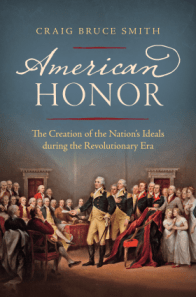 In American Honor, Craig Bruce Smith places morals, virtue, and ethics at the center of the American Revolution. Smith argues that in the late-colonial period, understandings of honor transformed. Instead of something hereditable, honor became based on merit. That “ethical transformation” helped bring about the Revolution. Independence then allowed Americans to realize its potential. In a phrase, you might say the American Revolution was “made on honor, sold on merit.”[1]
 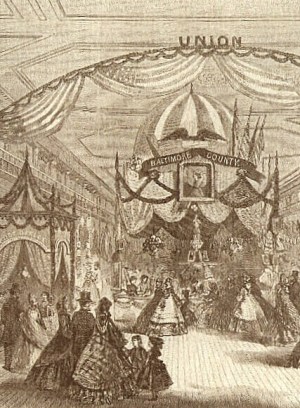 “We all declare for liberty,” Abraham Lincoln remarked in 1864, “but in using the same word we do not all mean the same thing.” That word gets thrown around a lot when we talk about, and especially when we commemorate, the early American republic. Since I started my job two years ago, I’ve been teaching a course on “the meaning of liberty” from Revolution to Civil War. In this post I want to reflect on the process of designing, teaching, and redesigning that course—a process of thinking through American “liberty” with my twenty-first century British students in mind.
  Today at The Junto, Philippe Halbert interviews Erin M. Greenwald about her exhibition,
 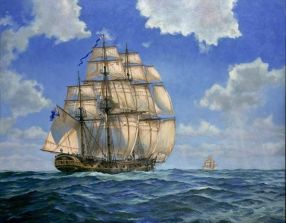 Black men in early America strived for masculine recognition in their society which did not provide many opportunities for Black men to publicly present themselves as men. In 2007, through The William and Mary Quarterly, maritime historian W. Jeffrey Bolster published “Letters by African American Sailors, 1799-1814,” which is useful in examining how Black men performed masculinity to not only provide for themselves and their families, but also to provide opportunities to be recognized as men. In my first post for The Junto, I decided to focus on the life of one of the Black sailors involved in the letters named Jacob Israel Potter. As an early nineteenth century impressed, or captured, Black sailor from Lewes, Delaware by the British Royal Navy, conceptually speaking, the parameters of freedom were far different for him as a person of African descent than someone white. Generally, Black freedom was always in tension with Black mobility. Scholars like Elizabeth Pryor examine this tension in the lives of Black antebellum activists from the late 1820s until just before the Civil War, but this post, in part, examines this tension with the added caveats of how Black masculinity and Black patriotism coincided with this tension as well.[1]
 We are pleased to host a Q&A with
  The Junto